Puerto Viejo de Talamanca doesn’t feel like the rest of Costa Rica. People speak Creole alongside Spanish, rice is cooked in coconut milk, and the music drifting out of the bars is calypso, not cumbia. It is the gateway to the southern Caribbean: some thirty kilometres of coast between Cahuita and Manzanillo with the prettiest beaches in the country and a deliberately slow pace.
A different Costa Rican history
Limón province was settled largely by Afro-Caribbean workers who arrived from Jamaica in the late nineteenth century to build the railway and later work the banana plantations. Their culture — language, food, music, religion — remains strong, and it’s why this coast feels closer to Belize or the islands than to San José.
The Bribri and Cabécar indigenous territories also lie here, in the mountains rising towards the Panamanian border.
The beaches, north to south
Cahuita and its national park
About 15 km north. Cahuita National Park has an 8 km coastal trail between beach and forest, with monkeys and sloths all but guaranteed, and a coral reef off Punta Cahuita. Entry at the Kelly Creek gate works by donation, making it the cheapest park in the country.
Playa Negra and Playa Cocles
Playa Negra has dark volcanic sand, calm water and good swimming. Cocles, just south of town, is the surf beach: beautiful, with serious rip currents. There are lifeguards in season, and it pays to listen to them.
Punta Uva
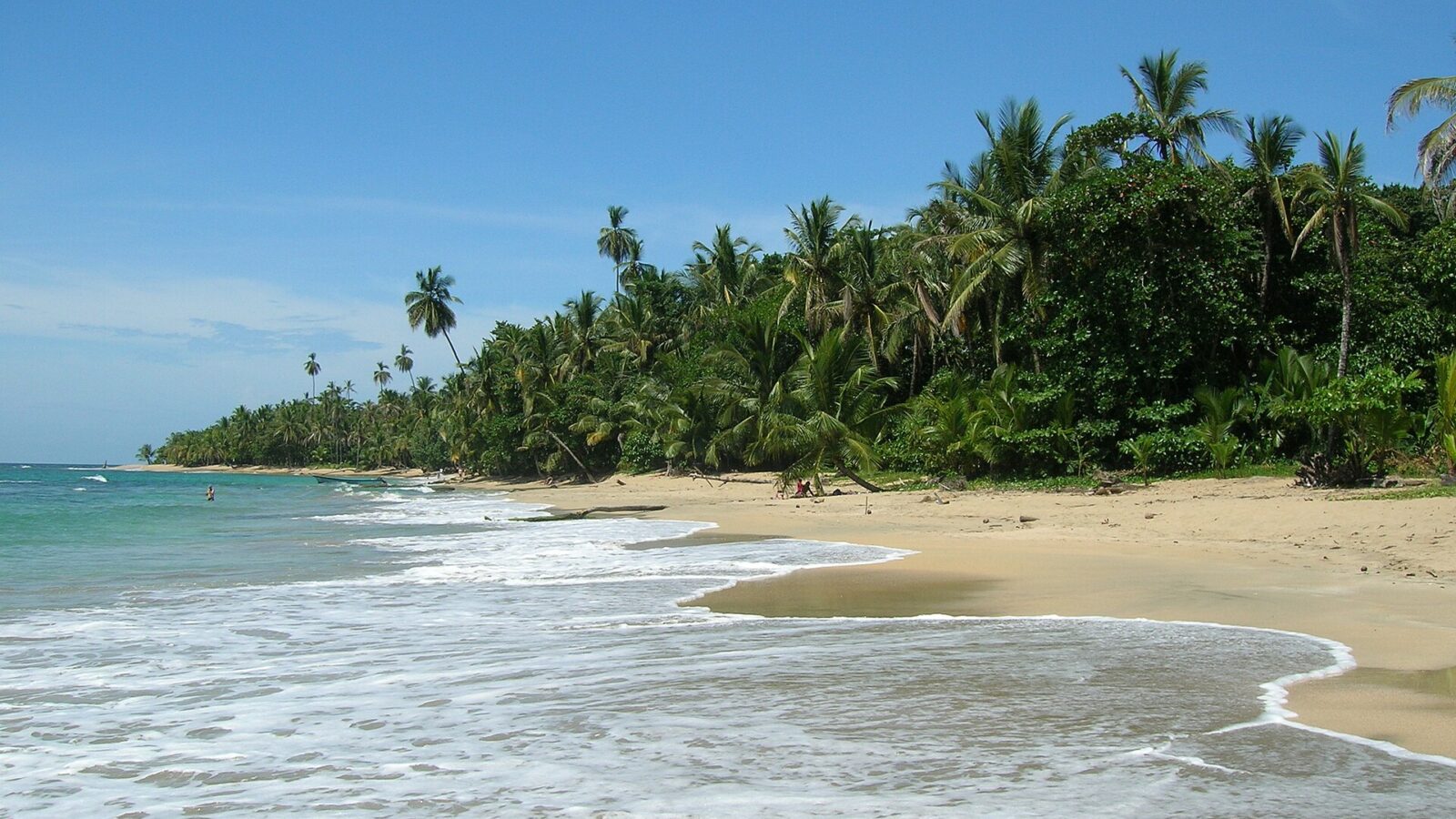
For many, the most beautiful beach in Costa Rica. Turquoise, calm water, palms leaning over the sand and a forested headland sheltering it from the swell. It’s the one beach here where swimming is almost always easy.
Manzanillo
Where the road ends and the Gandoca-Manzanillo Wildlife Refuge begins. A tiny village, a couple of fish sodas, and a trail following the coast south through mangrove and reef.
Things to do besides the beach
- Rent a bicycle. It’s the best transport here: the road to Manzanillo is flat and reaches every beach.
- Snorkel the reef at Cahuita or Manzanillo, best from February to April and in September–October, when the water is clearest.
- Visit the Jaguar Rescue Center or the Sloth Sanctuary, rescue centres offering guided visits.
- Go up into Bribri territory with a local guide: cacao, medicinal plants and waterfalls.
- Go out at night in town, which has more going on than anywhere else on the Costa Rican Caribbean.
Caribbean food
Reason enough to come. The signature dish is rice and beans, which here is not the gallo pinto of the rest of the country: rice and beans are simmered in coconut milk with thyme and Panamanian chilli. It comes with Caribbean chicken or fish in coconut sauce.
Look out too for rondón, a stew of fish, root vegetables and coconut milk usually made to order, and pan bon, sweet and spiced.
Getting there and when to go
Direct buses run from San José to Puerto Viejo in about four and a half hours via Limón. By car it’s an easy drive on good roads.
The Caribbean climate works opposite to the Pacific: September and October, the worst months elsewhere in the country, are usually the sunniest here. The wettest are November, December, July and August. It’s a detail many travellers don’t know, and it can save a holiday.
Conclusion
The southern Caribbean is the part of Costa Rica that looks least like the brochure and hooks visitors hardest. Three or four nights in Puerto Viejo, a bicycle and the road to Manzanillo make one of the best combinations in the country — especially if you hit that sunny window in September and October.
Planning a trip to Costa Rica? Read our Costa Rica travel guide 2026.