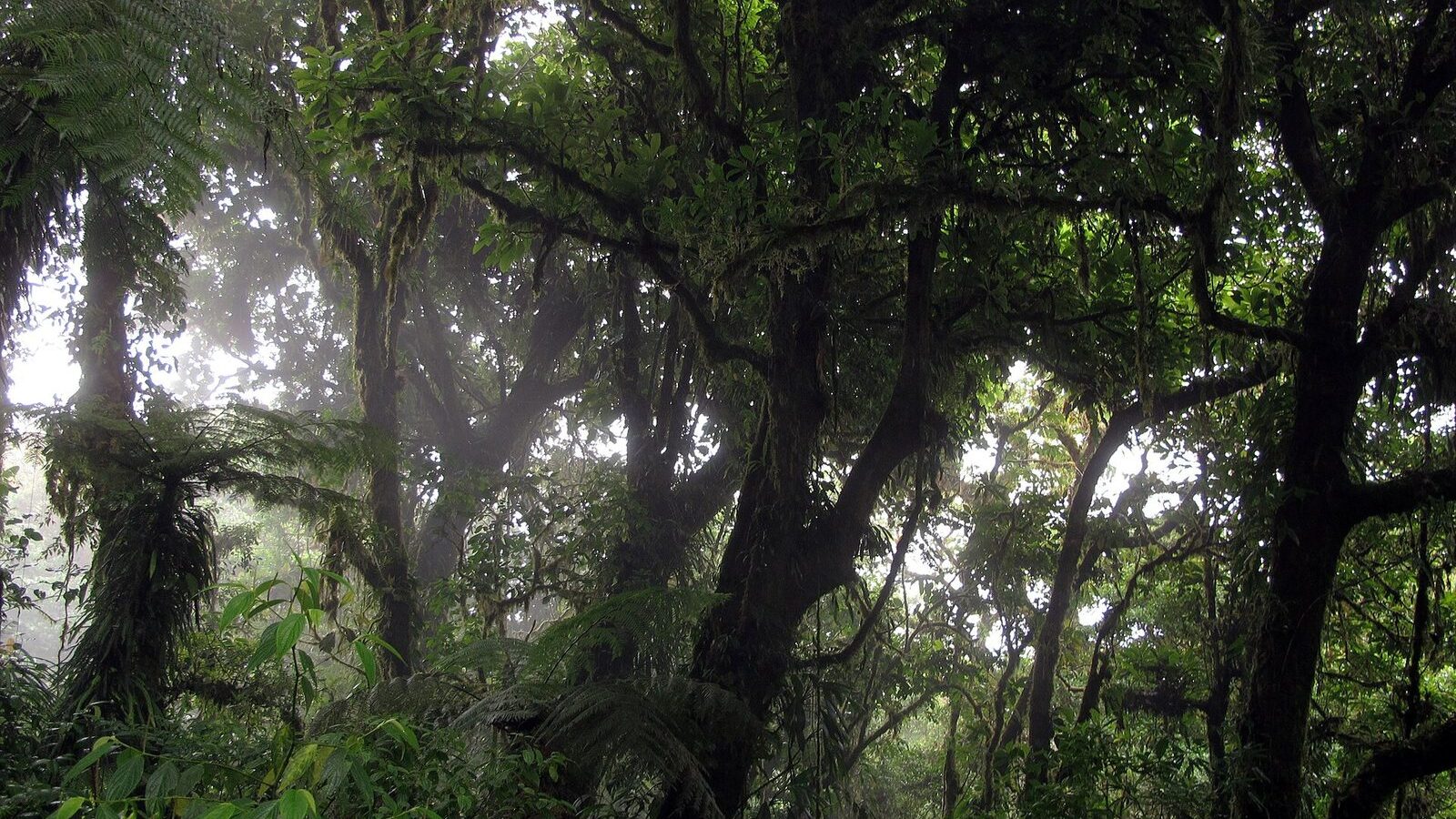
Monteverde is shorthand for cloud forest, extraordinary biodiversity and world-class ecotourism. This small corner of the Costa Rican mountains holds one of the most diverse ecosystems on the planet, where cloud sits permanently in the canopy and the resplendent quetzal moves through the mist.
What a cloud forest is
A tropical mountain ecosystem defined by persistent cloud cover at canopy level. That creates near-constant humidity, which in turn allows a unique vegetation: dense epiphytes, moss, bromeliads and orchids growing on every available surface.
Monteverde, between 1,200 and 1,800 metres, is regarded as one of the best-preserved and most studied cloud forests in the world. The wider area protects more than 30,000 hectares of primary forest.
The Monteverde reserve
Founded in 1972 with the help of the local Quaker community and run by the Tropical Science Center, this is the most visited private reserve in Costa Rica.
- Area: 10,500 hectares of protected forest.
- Species: more than 100 mammals, over 400 birds, 120 amphibians and reptiles and over 2,500 plants.
- Trails: 13 km, well maintained.
- Hours: 7:00 to 16:00, with night tours available.
- Entry: $25 USD adults, $12 USD students.
The main trails
- Bosque Nuboso: the most popular, 2 km straight into the ecosystem.
- Pantanoso: follows the edge of a unique wetland.
- Chomogo: climbs to a viewpoint.
- La Ventana: the panoramic point where, on a clear day, you can see both oceans.
Santa Elena reserve
Smaller, higher and considerably quieter than Monteverde, and run by the local secondary school, so entry fees fund education directly. If the main reserve feels crowded, this is the alternative — the forest is arguably even more atmospheric.
The quetzal
The bird everyone comes for. The best season is February to July, when they nest, and the best time of day is first thing in the morning. A guide makes an enormous difference: they know the fruiting avocado trees the quetzals feed in.
Be prepared not to see one. It happens, and the forest is worth the visit regardless.
What else to do
- Hanging bridges: walking the canopy at its own level, which is where most of the life actually is.
- Zip lines: Monteverde is where commercial canopy tours were invented, and the lines here are long and fast.
- Night walks: a completely different forest — tarantulas, sloths, kinkajous and frogs.
- Butterfly gardens, frog ponds and hummingbird galleries, all good in bad weather.
- Coffee and cheese tours: the Quaker settlers founded a dairy that still operates.
Getting there
Monteverde is reached on a notoriously rough road — part of the community has resisted paving it precisely to limit visitor numbers. Allow four to five hours from San José by shuttle.
From La Fortuna, take the jeep–boat–jeep transfer across Lake Arenal: around three hours and much more pleasant than the road around.
Practical advice
- It is cold and wet. Bring layers and a waterproof; this is not the Costa Rica of the beach brochures.
- Start at opening time for wildlife.
- Book a guide in advance in high season.
- Two nights is right: one for a reserve, one for bridges or a night walk.
- Santa Elena, the town, has the accommodation and restaurants.