
Costa Rican cooking is the most understated in Central America and the one that grows on you most. It doesn’t chase heat or spectacle: it goes for balance, freshness and a handful of dishes done well, every day. Understand the casado and you understand the country.
The two pillars
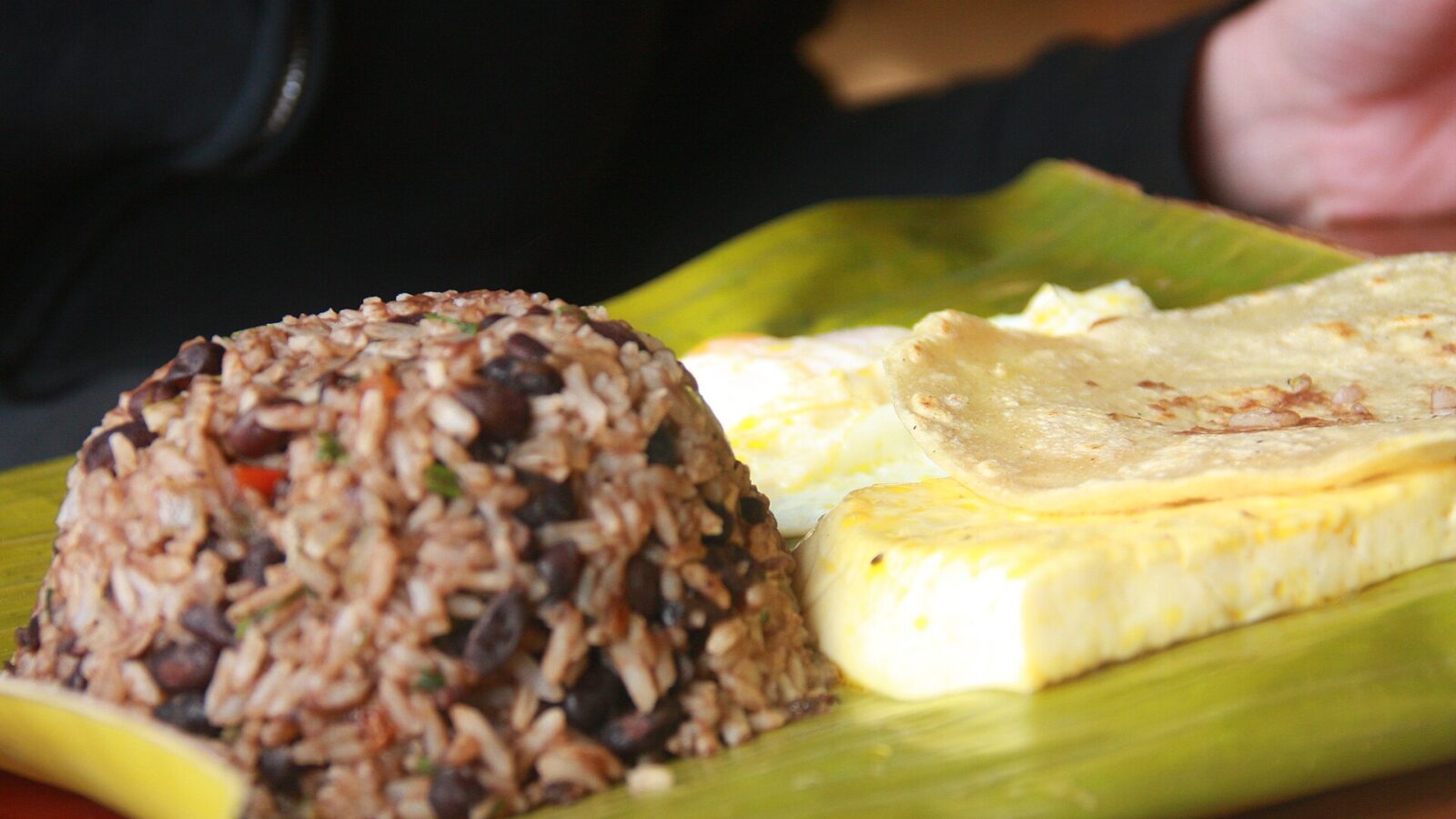
Gallo pinto
The national breakfast: rice and black beans fried together with onion, sweet pepper, coriander and — non-negotiable in Costa Rica — a splash of Salsa Lizano, which gives it the colour and the sweet-sour edge. Served with egg, fresh cheese, sour cream, fried ripe plantain and tortilla.
Nicaragua claims to have invented it and the argument is an old one. The practical difference: the Nicaraguan version is drier and usually made with red beans; the Costa Rican one is moister and uses black.
Casado
The everyday lunch and the best value in the country. On one plate: rice, beans, cabbage salad, fried ripe plantain, sometimes picadillo or mash, and a protein — chicken, beef in sauce, pork or fish.
The name, by the most repeated explanation, means “the married man’s meal”: complete, balanced, the way your partner would make it at home. You order it in sodas, the neighbourhood canteens, and that’s where you eat well and cheaply in Costa Rica.
Soups and stews
- Olla de carne: the Sunday dish. A long beef broth with cassava, ñampí, plantain, chayote, corn and carrot. Broth and vegetables are served separately, with rice.
- Sopa negra: black bean broth with a poached egg dropped in. Simple and restorative.
- Chifrijo: a recent invention and already a bar classic. In a glass: rice, beans, pork crackling, pico de gallo and avocado, with tortillas.
- Arroz con pollo: the family-party dish, tinted with annatto.
Caribbean cooking, which is something else
In Limón province they eat differently, with Afro-Caribbean roots and a lot of coconut milk:
- Rice and beans: here both are simmered in coconut milk with thyme and Panamanian chilli. Not to be confused with gallo pinto.
- Rondón: fish or seafood stewed with root vegetables and coconut milk, usually ordered ahead.
- Pan bon: dark sweet bread with candied fruit and spices.
- Patí: a spicy meat turnover, inherited from Jamaica.
Snacks and street food
- Gallos: a tortilla with any filling. The Tico equivalent of a taco.
- Empanadas of cheese, bean or picadillo, in corn dough.
- Tamal: corn dough with meat, wrapped in banana leaf. Christmas food, not year-round.
- Ceviche: sea bass with coriander and sweet pepper. Less acidic than the Peruvian version and served with soda crackers.
- Chicharrones with cassava and lime.
Sweets and drinks
For dessert, tres leches, rice pudding and coconut or milk cajetas. Coffee is taken seriously: Costa Rica grows high-altitude arabica and the cloth chorreador is still the traditional way to brew it.
To drink, order a fresco natural: fruit blended with water or milk. Cas, tamarind, passion fruit, blackberry, soursop. And for something very local, agua de sapo, a ginger and raw-sugar lemonade that contains no toad whatsoever.
Where to eat without going wrong
The rule is simple: look for the sodas. Small, family-run canteens with the day’s menu chalked on a board. You’ll eat a full casado for a fraction of what any tourist-facing restaurant charges, and almost always better.
The central markets in San José, Alajuela and Cartago have sodas inside and make a good first stop on arrival.
Conclusion
Costa Rican food doesn’t dazzle on the first spoonful, but it wins you over. Eat casados in sodas, have gallo pinto for breakfast, try rice and beans on the Caribbean coast and drink frescos instead of soft drinks. Do that and you’ve understood most of it.
Planning a trip to Costa Rica? Read our Costa Rica travel guide 2026.