Between Managua and Granada lies a plateau of craft villages, volcanic lagoons and a crater you can drive up to and watch lava from. Masaya Volcano and the Pueblos Blancos fit into a single day and make, arguably, the best day out in Nicaragua.
Masaya Volcano
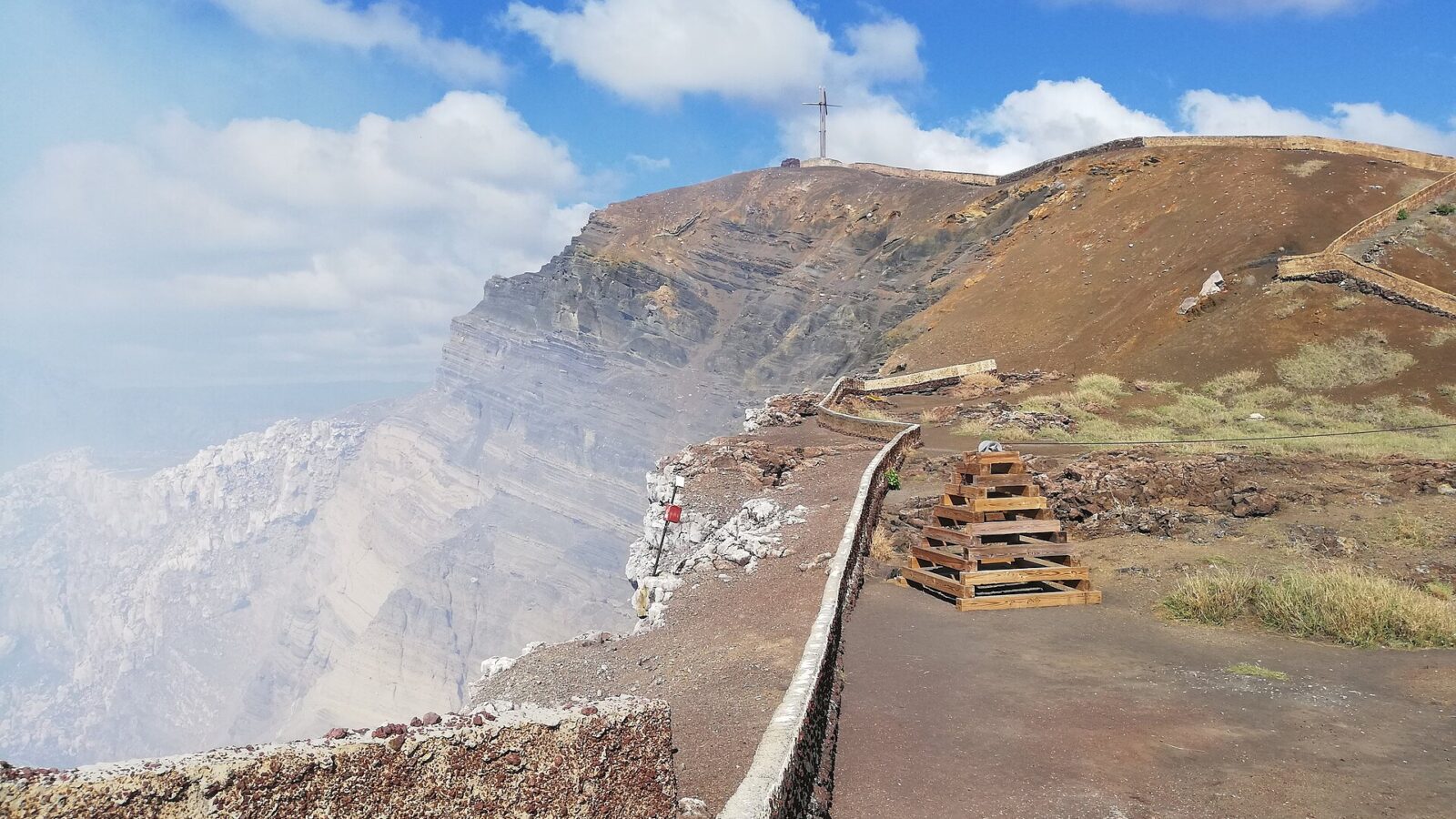
It’s one of very few volcanoes in the world where the road runs to the crater rim. You park a few metres from the viewpoint, step out of the car, and there is Santiago crater, smoking.
When the lava lake is active and visible, the night visit is extraordinary: an orange glow shifting at the bottom of the shaft. That said, it needs stating plainly — visibility of the lava lake varies with the volcano’s activity, and there have been long stretches when nothing was visible. Nobody can promise it in advance.
Practical details:
- Night visits run in timed slots with limited time at the rim and usually sell out; book ahead.
- The sulphur gases are strong. If you have respiratory problems, weigh it up.
- Cars are parked facing out, ready to leave, in case of evacuation. The ranger will tell you.
- Inside the park there are trails, the museum and the Tzinacanostoc caves, with bats.
The Spanish conquistadors called it the Mouth of Hell and planted a cross on the rim to exorcise it. It’s still there, rebuilt.
Masaya market
The town of Masaya is the craft capital of Nicaragua. The Mercado Viejo, inside a walled nineteenth-century compound, is the orderly, comfortable place to buy hammocks, ceramics, leather and textiles. The municipal market, messier and far less touristy, is where Nicaraguans shop.
Masaya hammocks are the country’s best-known product; you can watch them being woven in the workshops of the Monimbó neighbourhood.
The Pueblos Blancos
A string of villages on the Meseta de los Pueblos, each with its speciality:
- Catarina: famous for its viewpoint over Laguna de Apoyo, with Granada and Mombacho behind. It’s the most reproduced view in Nicaragua. The village itself lives off plant nurseries.
- San Juan de Oriente: the pottery village. Family workshops still using pre-Columbian techniques, where you can watch the wheel and buy straight from the maker.
- Masatepe: wood and wicker furniture, and the best place to eat sopa de mondongo.
- Niquinohomo: birthplace of Augusto C. Sandino, his house now a museum.
- Diriamba and San Marcos, a little further south, known for patron-saint festivals with masked dances.
Laguna de Apoyo
A flooded volcanic caldera around 200 metres deep, with warm, clean, faintly mineral water. You can go down to the shore and spend the day at one of the lodges that rent kayaks and loungers.
It’s one of the best swims in Central America and half an hour from Granada, so it also works as a day trip from there.
How to organise it
All of this sits within a triangle of about 30 km, so the best base is Granada — twenty minutes away — or Masaya itself.
A well-used day: Masaya market in the morning, San Juan de Oriente and Catarina at midday, a swim in Laguna de Apoyo in the afternoon and the volcano at dusk. With a rental car it’s easy; without one, most agencies in Granada sell this combination.
Conclusion
Few places pack so much into so little ground: an active crater you can drive to, the country’s best craft market, potters’ villages and a volcanic lagoon to swim in. If you have one free day from Granada, this is the plan.
Planning a trip to Nicaragua? Read our Nicaragua travel guide 2026.