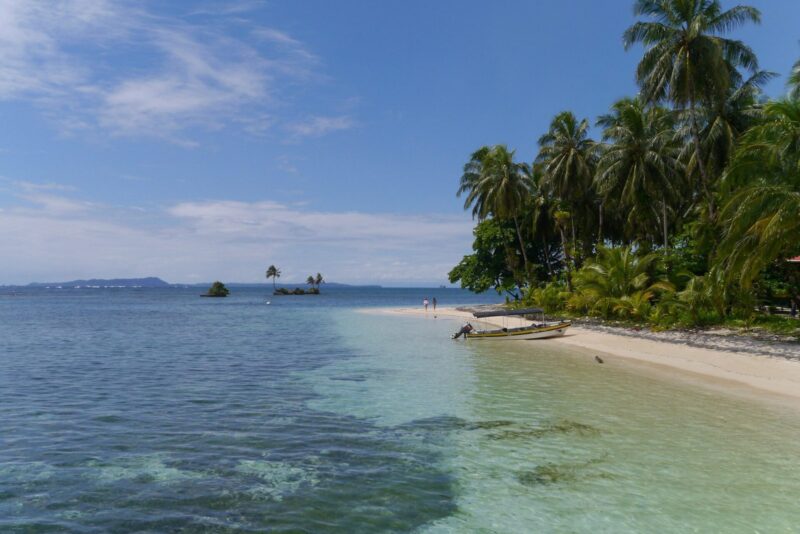
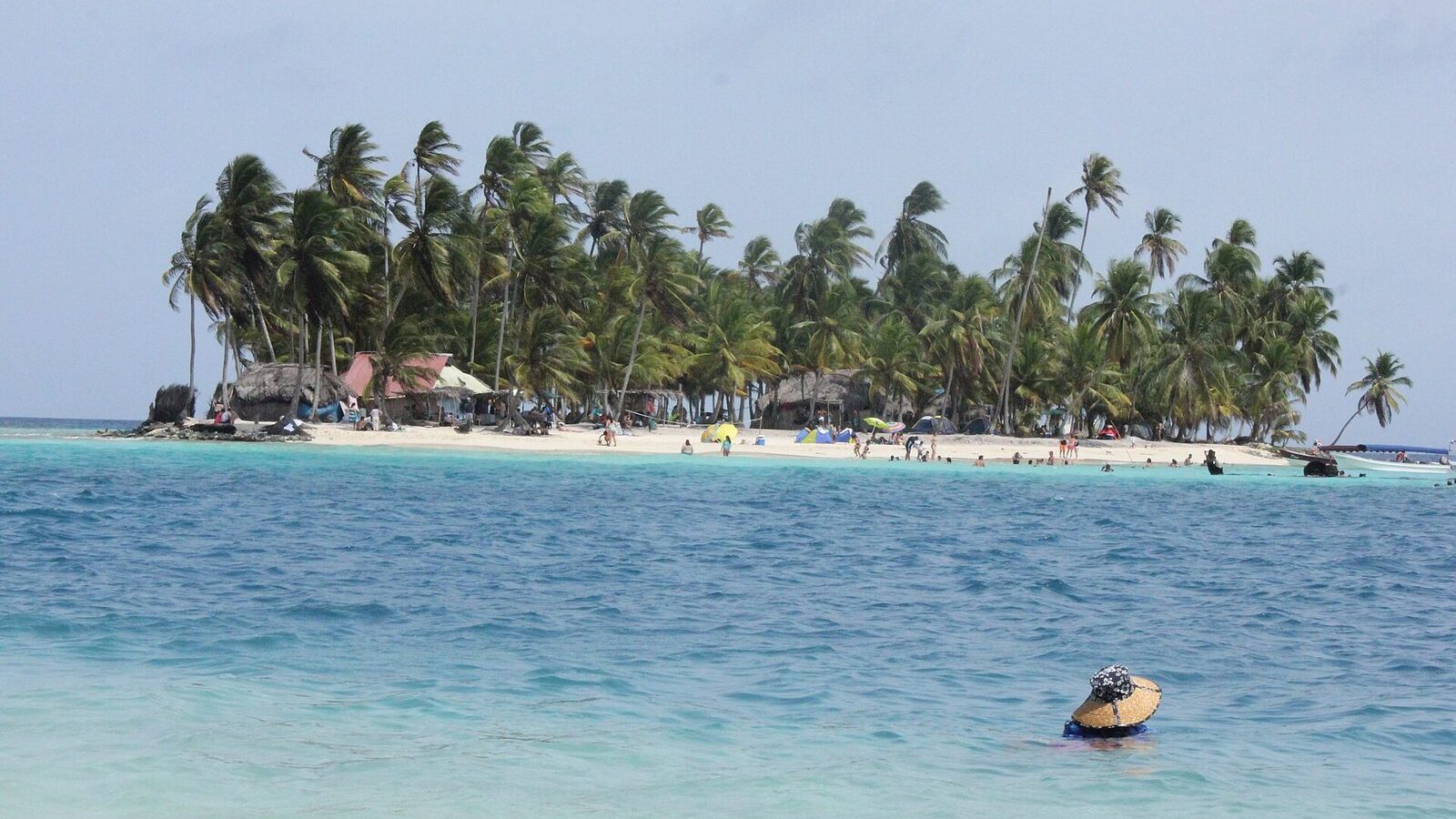
Islands the size of a football pitch, four palm trees, sand like flour and water so clear you can see the bottom at ten metres. San Blas is the Caribbean postcard, and also one of the most unusual destinations in the Americas: it is not run by the Panamanian state but by the Guna people.
That changes how you visit entirely. There are no resorts here, no air conditioning, no infinity pools. There are cane huts, hammocks and fish caught that morning. It is worth knowing before you book.
What Guna Yala is
Guna Yala is an autonomous indigenous comarca: a strip of Caribbean coast some 370 kilometres long and an archipelago of more than 350 islands, governed by the Guna with their own authorities, their own rules and their own language. “San Blas” is the colonial name; the one they use is Guna Yala.
The Guna won that autonomy after the 1925 revolution and they guard it closely. In practice it means they control tourism: the islands are communally owned, the lodgings belong to Guna families, and there are rules a visitor is expected to respect.
Getting there
By 4×4 from Panama City
The usual route. Four-wheel drives leave the capital before dawn, between 5 and 6 in the morning, and take about two and a half hours to the port at Cartí. The road crosses the cordillera with very steep gradients and tight bends: if you get carsick, prepare for it.
At Cartí you pay the comarca entrance fee and board a boat to whichever island you are sleeping on. The crossing takes from twenty minutes to over an hour depending on the destination.
By light aircraft
There are short flights from Albrook airport to some airstrips in the comarca. More expensive and irregularly scheduled, but it spares you the road.
By sailing boat
San Blas is the classic stop for yachts sailing between Panama and Cartagena de Indias. These are usually five-day trips with three spent anchored among the islands. It is the most comfortable way to see many cayes and the most expensive.
Where to stay
The typical lodging is a cane hut with a palm roof on the sand, with a bed, a mosquito net and not much else. It normally includes three meals a day and a daily boat trip to other cayes, because there is nowhere to buy anything.
What to expect, honestly: electricity limited to a few hours from a generator or solar panels, brackish water in the showers, shared or dry toilets on the smaller islands, and patchy phone signal. Islands with a little more comfort exist, but they are still a long way from a beach hotel.
Two nights is the sweet spot. With one, half the trip is spent on the road; with more than three it can get repetitive unless you dive.
What to do
- Island hopping: the daily boat trip usually takes in two or three islands, some with barely three palm trees.
- Snorkelling: there is reef and several wrecks reachable from the surface. Bring your own gear if you can.
- The Natural Pool: a sandbank in the middle of the sea where the water comes to your waist and starfish are common.
- Visiting an inhabited island: Cartí Sugdup and other communities allow visits. It is the most interesting part of the trip and the part that demands the most respect.
Molas
A mola is the textile panel Guna women sew for their blouses, made from several layers of cloth cut back so the colour beneath shows through. A good one takes weeks of work, and you can tell it by how fine the stitching is and how clean the cuts are.
Buying directly from the woman who sewed it is the best way to make sure the money lands where it should. Haggle little: the prices are already low for what they are.
Rules you should respect
- Ask before photographing anyone. In the communities it is normal to be asked for a small payment for a photo: that is their rule, not a scam.
- No drones without express permission from the community.
- Clothing: swimwear is for the beach. On inhabited islands, cover up.
- Take your rubbish with you. The islands have no waste system and what you leave stays.
- Sunscreen: use mineral, without oxybenzone, for the reef.
What to bring
Most important of all: cash in small notes. There are no ATMs and no card machines anywhere in the comarca, and you will be paying for entrance fees, extras, molas and beer in cash.
Add strong insect repellent (the evening sandflies are relentless), a head torch, a power bank, seasickness tablets, a quick-dry towel and a dry bag for your phone on the boat. Pack light: the boats are small and everything gets wet.
When to go
The dry season, December to April, brings the clearest days and the calmest sea. Between November and January fronts can bring wind that complicates the boat crossings. In the rainy season the downpours are usually short, but the Cartí road gets difficult.
Comarca entrance and transport fees change often and are always paid in cash. Confirm them with your lodging before setting out.