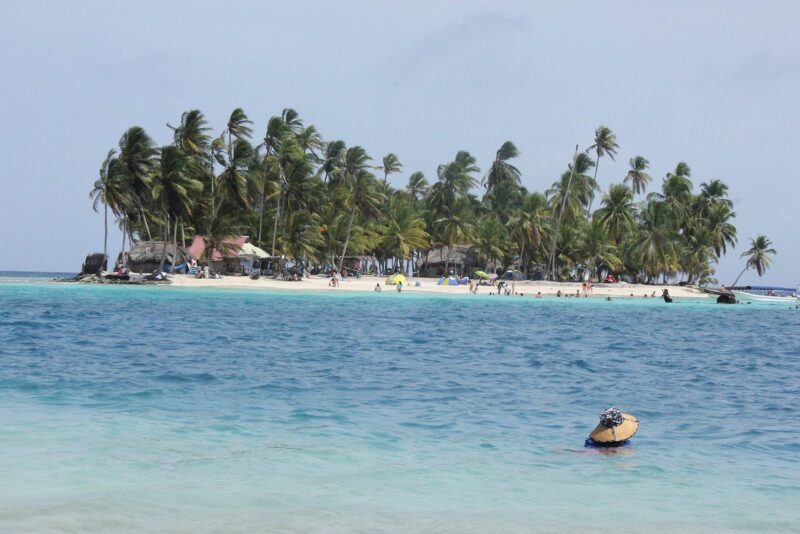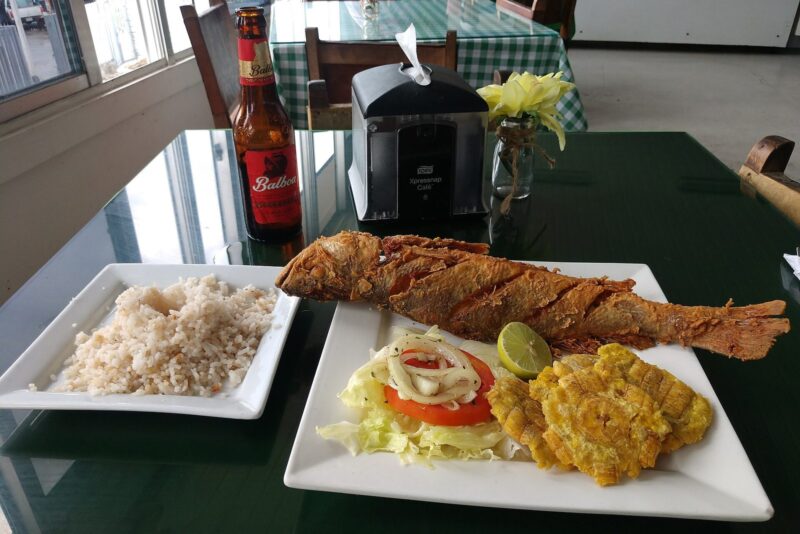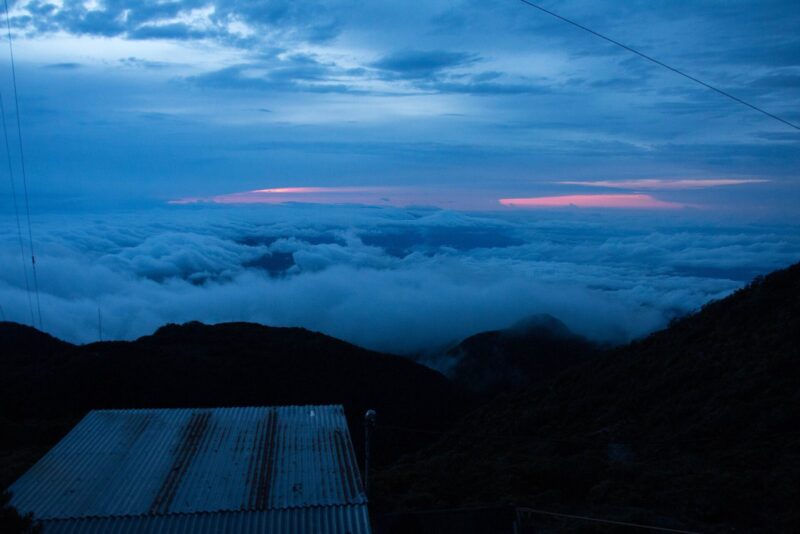
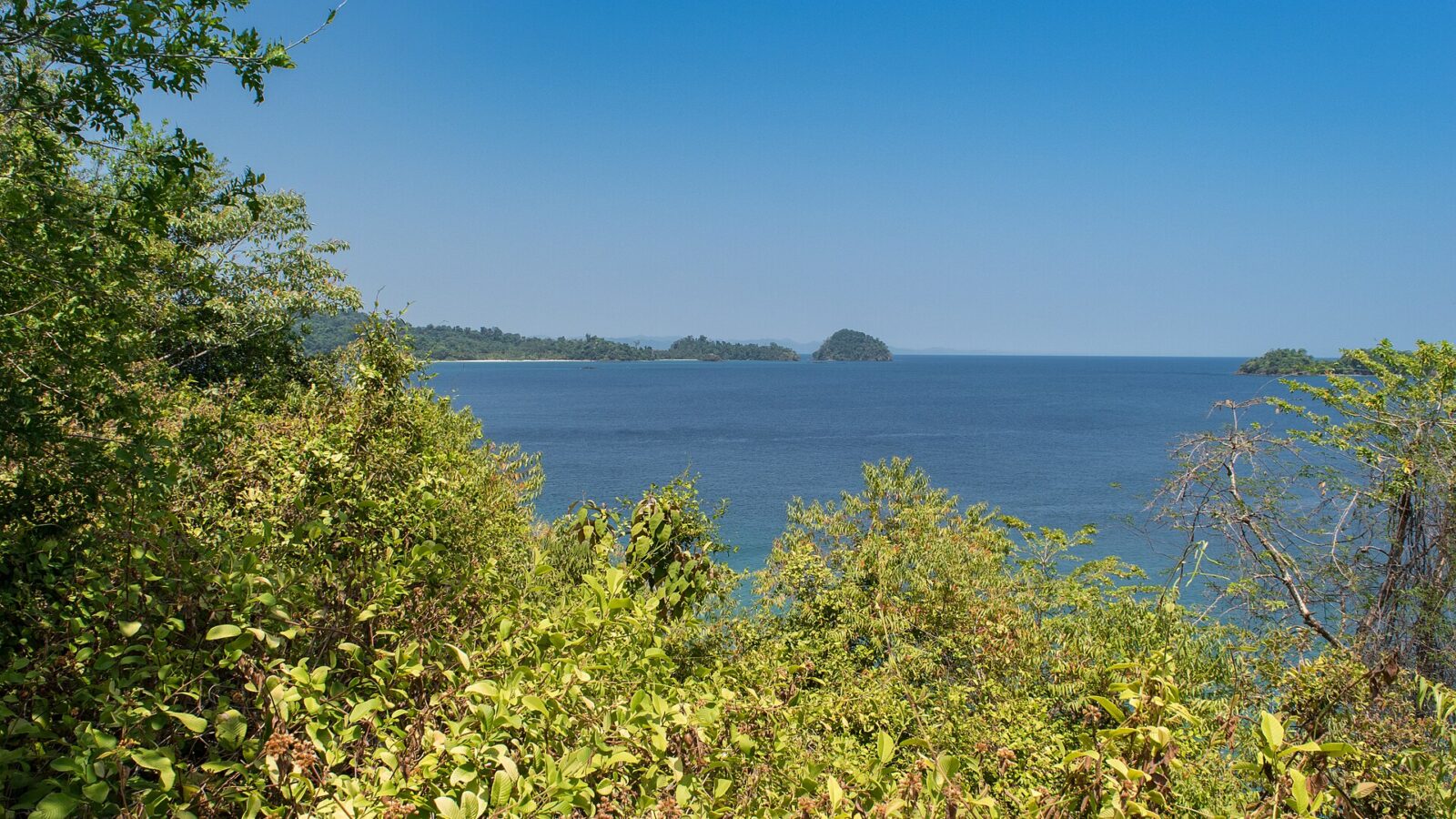
Santa Catalina is a fishing village on the Pacific coast of Veraguas, known for two things that don’t usually go together: one of the best waves in Central America and the closest access to Coiba National Park, a World Heritage site and one of the finest diving destinations in the American Pacific.
Coiba: what it is and why it matters
Coiba island was a penal colony from 1919 to 2004, and that grim history had an unexpected consequence: for nearly a century nobody logged its forest or fished its waters. When the prison closed, what remained was an intact ecosystem, declared a World Heritage site in 2005.
The park covers the island — the largest in the Central American Pacific — plus 38 other islands and islets, with the second-largest coral reef in the eastern Pacific. It forms part of the Eastern Tropical Pacific Marine Corridor, the migratory route linking Coiba with Galápagos, Malpelo and Cocos.
The diving
This is the main reason to come. Coiba is pelagic diving: big animals in open water, not delicate coral gardens.
- Whitetip reef sharks, abundant and all but guaranteed.
- Schooling hammerheads, especially at the seamounts, though not every day.
- Whale sharks and mantas, seasonally.
- Turtles, eagle rays, moray eels and huge shoals of jacks and barracuda.
- Humpback whales between July and October, when they come to calve. They are often seen from the boat.
An honest warning: Coiba is not beginner diving at most of its sites. There is current, sometimes strong, and visibility varies: it can drop from 30 metres to 8 within a single dive because of thermoclines. Anyone after clear, placid water will be happier in the Caribbean.
For snorkelling, the best spots are Granito de Oro, a tiny islet with a beach, and the shallows near the park station.
The surf
The Santa Catalina wave is a long right-hander over a rock bottom, internationally known and with a reputation for being demanding. It works best on a mid tide pushing in, and it can get genuinely big.
For learners, El Estero beach, a walk from the village, has a sand bottom and much more manageable waves, plus schools renting boards and giving lessons.
The best swell season coincides with the rains, April to October, when the southern swells arrive.
Getting there and where to stay
From Panama City it’s six or seven hours: the Interamericana to Santiago de Veraguas, then the turn-off for Soná and Santa Catalina. Buses run, changing at Santiago and Soná.
The village is small and plain: hostels, a few modest hotels and a handful of restaurants. Bring cash — ATMs are scarce and unreliable.
Visiting Coiba requires an authorised operator and a park fee; you can sleep in the ranger-station cabins on the island, with very limited places and advance booking.
When to go
Two opposite seasons, depending on what you’re after. December to April: calmer sea and better crossings, ideal for diving and day trips. April to October: better waves and the humpback whales, at the cost of rain and rougher water.
Conclusion
Santa Catalina is the Panama that doesn’t appear in Canal brochures: an unpaved village where people get up early to catch waves or head out to dive with sharks. Coiba justifies the journey on its own, and the fact that its conservation is owed to eighty years as a prison is one of the odder stories in the region.
Planning a trip to Panama? Read our Panama travel guide 2026.