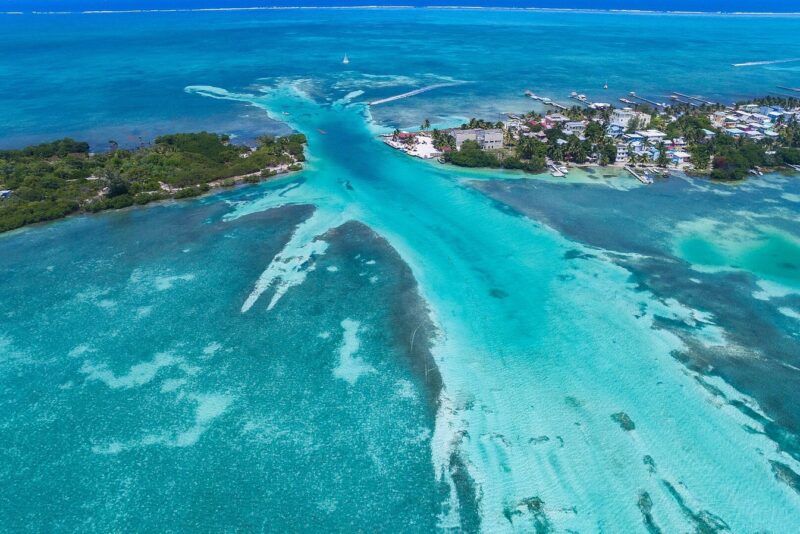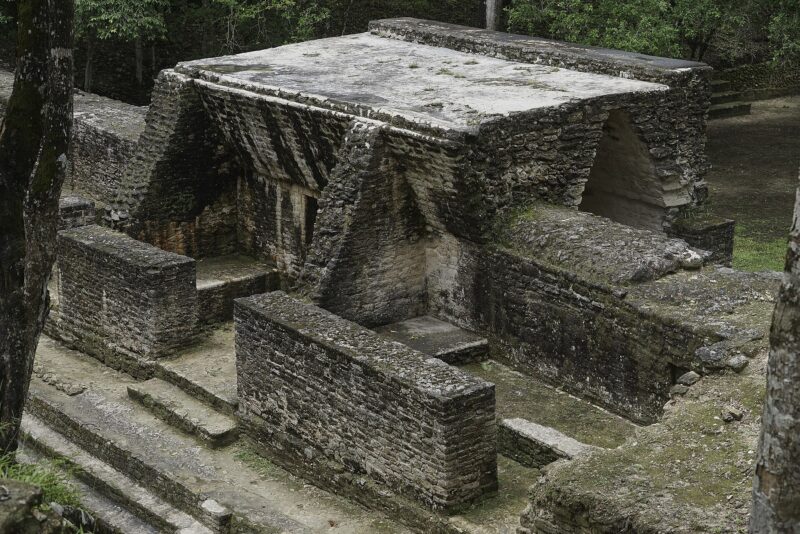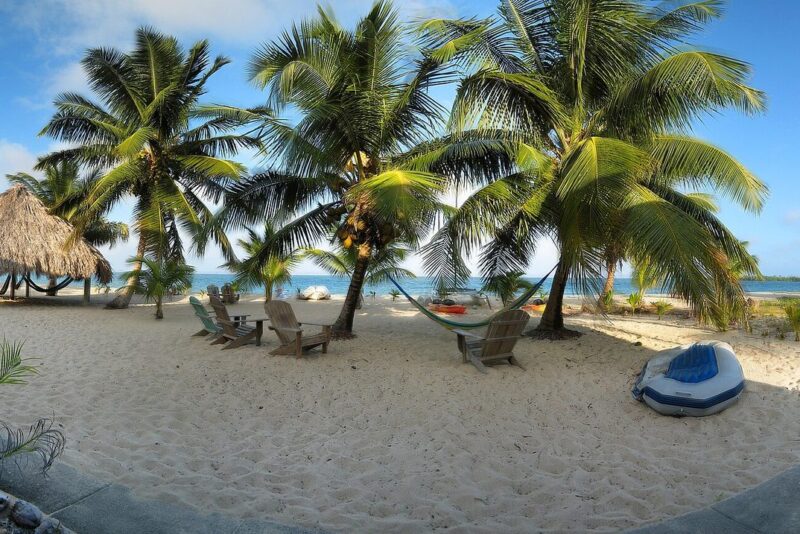
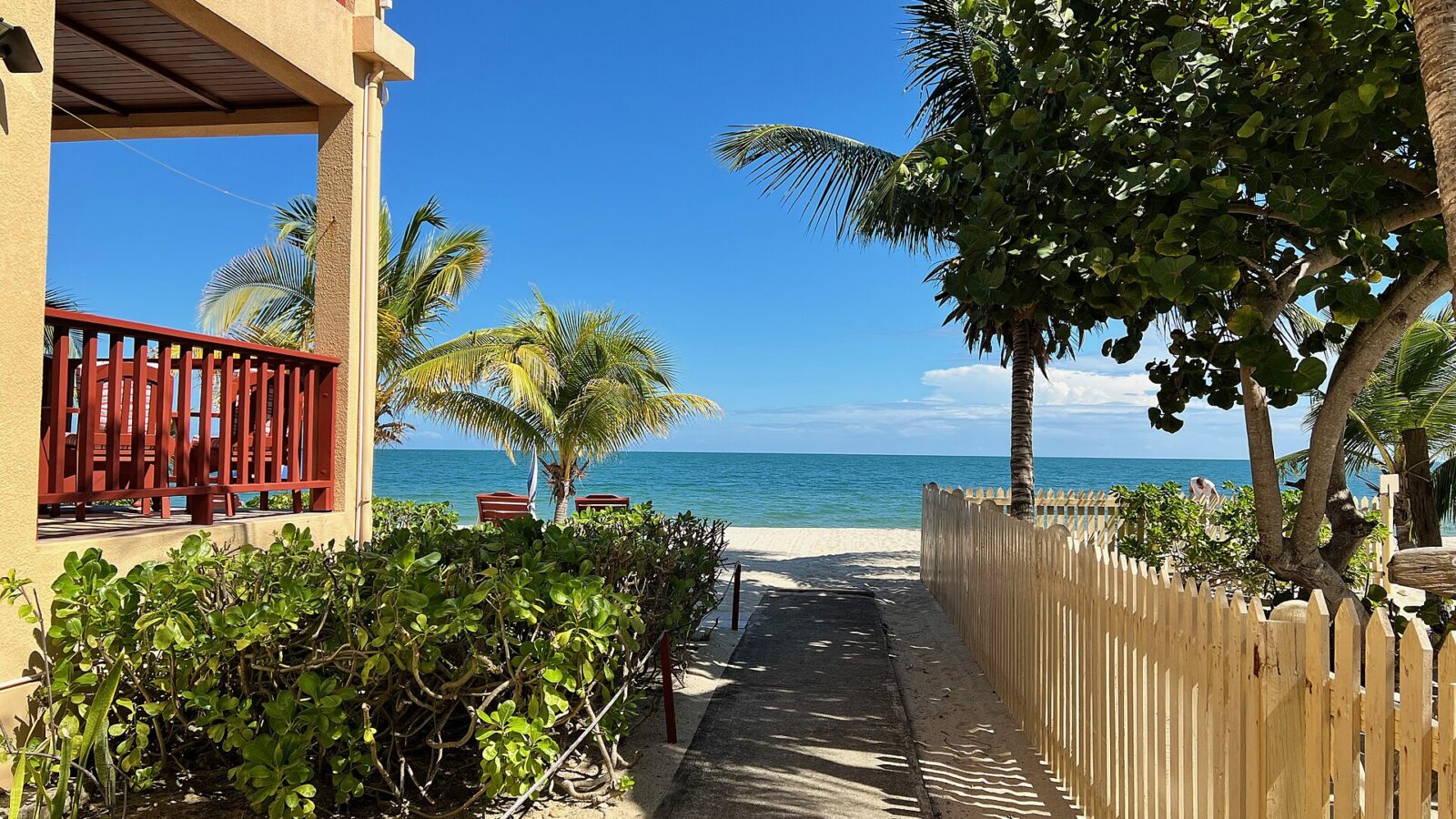
Placencia is a sliver of sand some twenty-odd kilometres long in southern Belize, so narrow that in places you can see the sea on both sides from the road. It’s the mainland alternative to the cayes: long sand beaches, without the crowds of Ambergris, and direct access to both the reef and the rainforest inland.
The peninsula, end to end
Worth understanding the geography before you book, because “Placencia” is used for three different places:
- Placencia Village, at the southern tip. The town proper: bars, restaurants, the pier and the famous Sidewalk, a concrete footpath barely over a metre wide that spent years listed as the narrowest street in the world.
- Seine Bight, halfway up. A Garifuna village, more local life and fewer tourist services.
- Maya Beach, to the north. The quiet end, scattered houses and some of the best restaurants on the peninsula.
If you want atmosphere and to walk to dinner, stay in the village. If you want silence, Maya Beach. It’s about 20 km between the two.
The sea: reef, whale sharks and cayes
The barrier reef lies further out than in the north — 30 to 60 minutes by boat — but that also means far less visited reefs.
- Laughing Bird Caye: a national park and World Heritage site, a tiny islet ringed by coral. The classic day trip, with snorkelling and lunch on the island.
- Silk Cayes: three minuscule cayes with good snorkelling and frequent turtle and ray encounters.
- Gladden Spit: the big draw. Between March and June, around the full moons, snappers gather to spawn and draw in whale sharks. There is no guarantee of seeing them, and anyone who offers you one isn’t being straight with you.
- Fly fishing: the flats off Placencia are known for bonefish, tarpon and permit.
The rainforest, an hour away
This is what sets Placencia apart from a caye: you can have breakfast by the sea and be under the forest canopy by mid-morning.
- Cockscomb Basin: the world’s first jaguar reserve, established in 1990. You’ll see tracks, not jaguars — they’re nocturnal and elusive — but the trails, waterfalls and birdlife are worth the trip.
- Monkey River: a boat trip upriver with howler monkeys, crocodiles and birds, followed by a short walk.
- Red Bank: between January and March, one of the best places on earth to see scarlet macaws.
Garifuna culture
Southern Belize is the heartland of the Garifuna, descendants of Africans and Arawak Caribs, whose language, dance and music are recognised by UNESCO. Seine Bight and nearby Hopkins are where you’ll find it strongest: punta drumming, cooking built on coconut milk and cassava, and Garifuna Settlement Day on 19 November, the best date of the year to be here.
Getting there
- By plane: flights from Belize City to the Placencia airstrip, about 35–40 minutes. Fastest and priciest.
- By car: around three and a half hours from Belize City on the Hummingbird and Southern Highways. Paved the whole way, and the Hummingbird valley stretch is beautiful.
- By bus: the cheap option, changing at Dangriga. Slow but workable.
- By ferry: the Hokey Pokey crosses the lagoon to Independence, useful if you’re coming from the south or from Guatemala.
When to go
Dry season runs December to May and is best for the sea. If whale sharks are the goal, the window is March–June around the full moon. June to November is wetter and falls within hurricane season, with noticeably lower prices.
One seasonal warning: between March and August sargassum can wash up on the beach. It isn’t dangerous, but it spoils the shoreline and can’t be predicted in advance.
Conclusion
Placencia is the best choice in Belize for anyone who wants a real beach — long, sandy, no boat required to reach it — and to be able to step into the rainforest the same day. It’s quieter than Ambergris, more comfortable than Caye Caulker, and the only base from which both Cockscomb and the reef are within reach.
Planning a trip to Belize? Read our Belize travel guide 2026.