Belizean cooking is the most distinctive in Central America, and for the same reason as everything else here: this is where the anglophone Caribbean, Maya inheritance, Garifuna cooking, northern Mexican influence and even Mennonite and Chinese kitchens all meet. The result resembles nothing in the neighbouring countries.
These are the dishes that define a Belizean table.
Rice and beans (and beans and rice)
They are two different dishes and confusing them marks you out as newly arrived.
Rice and beans is rice cooked together with red beans and coconut milk, so it comes out tinted, rich and aromatic. It is the de facto national dish, and it almost always arrives with stewed chicken, coleslaw and fried plantain.
Beans and rice, by contrast, is white rice with the beans served separately, in their broth. Order one or the other correctly and you will earn a smile.
Stew chicken
Belizean stewed chicken, marinated with recado rojo — an annatto paste of Maya origin — and cooked down until dark and sticky. Alongside rice and beans it is the plate of the day in any local kitchen in the country.
Breakfast
- Fry jacks. Triangles of fried dough, hollow and crisp, filled with refried beans, cheese, egg or ham. The Belizean breakfast.
- Johnny cakes. Dense baked rolls of flour and coconut, split and filled.
- Eggs with chaya. With the Maya green leaf, similar to spinach, that grows in every yard.
Street food
- Garnaches. Fried tortilla with refried beans, grated cheese and pickled cabbage. Sold by the piece and costing pennies.
- Salbutes and panades. The first a puffed tortilla topped with chicken; the second fried turnovers of fish or beans.
- Tamales and bollos. Maize dough with recado and chicken, wrapped in plantain leaf.
- Conch fritters. Only in open season, which closes part of the year to protect the species.
Garifuna cooking
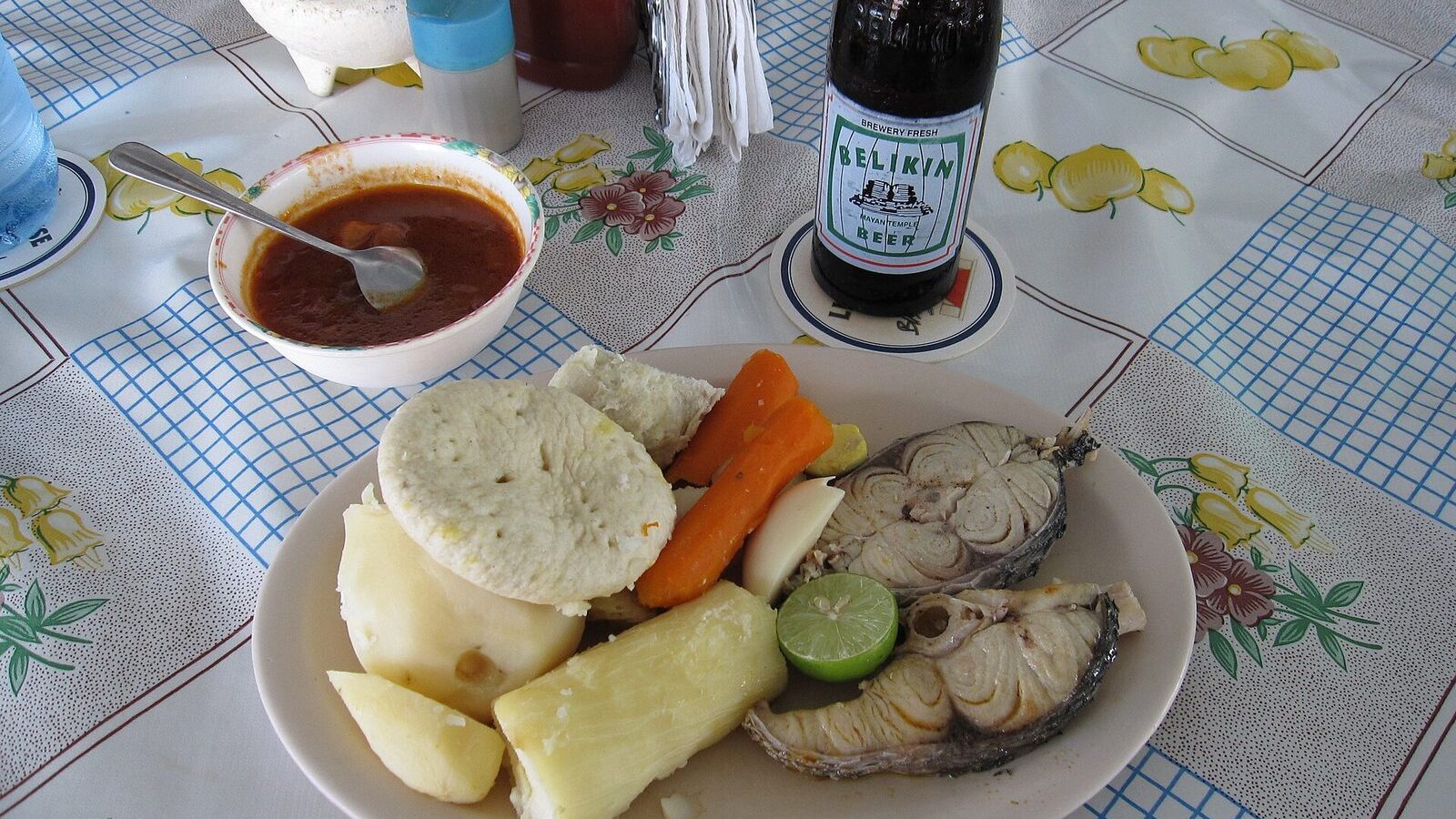
Along the southern coast, in Dangriga, Hopkins and Punta Gorda, they eat differently. The great dish is hudut: fish cooked in a thick coconut broth, served with fufu, a mash of green and ripe plantain pounded by hand in a wooden mortar.
Try sere too, another coconut and fish soup, and ereba or cassava bread: a thin, crisp flatbread of bitter cassava whose preparation is so laborious that UNESCO recognised it as part of Garifuna cultural heritage.
Marie Sharp’s
Not a dish but an institution. The habanero and carrot hot sauce Marie Sharp started making in her kitchen in Dangriga is now on every table in the country, from street stall to luxury hotel. There are versions from mild to the frankly reckless “Beware”.
It is the best edible souvenir you can take home, and it costs local prices in any supermarket.
Drinks
- Belikin. The national beer, with Altun Ha printed on the label. Effectively the only one you will find.
- Belizean rum. Made in the country, cheap and decent.
- Seaweed shake. Seaweed blended with milk, cinnamon and nutmeg. It sounds worse than it is.
- Seasonal juices: tamarind, cashew fruit, soursop and rice horchata.
Where to eat
Belize is expensive compared with its neighbours, but the local food is not. Look for street stalls and places without a tourist menu: in San Ignacio, the market; on Caye Caulker, the afternoon grills; in Hopkins and Dangriga, the Garifuna home kitchens, which usually want a few hours’ notice.
Lobster and conch seasons are set by law and the dates change. If either is offered out of season, do not order it.