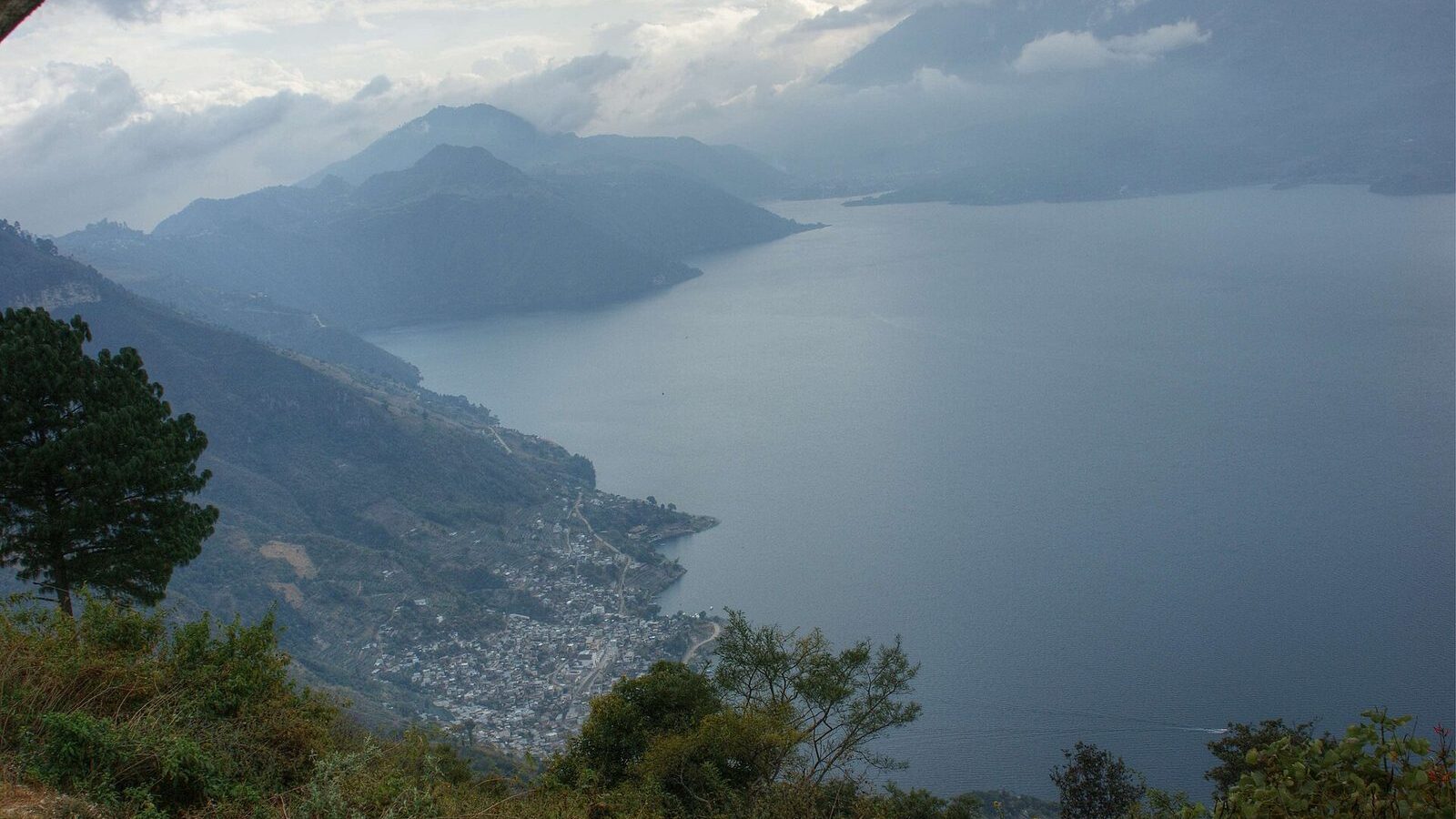
Aldous Huxley called Lake Atitlán the most beautiful lake in the world. It sounds like a writer exaggerating until you see it: ringed by three volcanoes, Maya villages and mountains that change colour with the light.
But Atitlán is not just a pretty lake. It is a cluster of villages with genuinely different personalities, living cultures, and everything from extreme hiking to yoga retreats.
What makes it special
At an estimated 340 metres deep, Atitlán is the deepest lake in Central America. It formed thousands of years ago in the crater of a vast volcano, and today three more volcanoes stand over it: San Pedro (3,020 m), Tolimán (3,158 m) and Atitlán (3,537 m).
Beyond the scenery, what makes Atitlán unique is the culture around it. The lake is home to Kaqchikel and Tz’utujil Maya communities who keep their traditions, dress and languages alive.
The villages
Panajachel — the gateway
“Pana” is the most developed and most touristy village, and where almost everyone arrives. Supermarkets, pharmacies, ATMs, travel agencies and accommodation at every price. Calle Santander is the main drag, lined with craft stalls. Not the prettiest village, but the most practical base.
San Pedro La Laguna
The backpacker village: cheap hostels, Spanish schools, bars and a lively social scene. It sits at the foot of San Pedro volcano, which you can climb in a morning. Two distinct worlds coexist here — the traveller strip by the water and the Maya town up the hill.
San Marcos La Laguna
The spiritual and wellness village: yoga, meditation retreats, holistic therapies and vegetarian cafés. It also has the best swimming on the lake, off the rocks at Cerro Tzankujil, where there is a jumping platform.
San Juan La Laguna
The one most visitors end up loving. Clean, orderly and painted in murals, with women’s weaving cooperatives using natural dyes, coffee cooperatives and art galleries. It has kept its Tz’utujil character while organising tourism on its own terms.
Santiago Atitlán
The largest and most traditional town on the lake, and the place to understand living Maya religion. Here you can visit Maximón, a venerated folk saint who receives offerings of cigarettes and alcohol and moves house each year. Ask permission before photographing anything.
Santa Cruz and Jaibalito
Reachable only by boat, with no road access. The quietest places on the lake, with a handful of lodges right on the water. Choose these if you want to do nothing at all.
Getting around
The lanchas — public boats — are the transport system. They run between villages from early morning until late afternoon, leaving when they fill rather than to a timetable. Fares are low but foreigners are routinely quoted more; ask a local what the fare is.
Important: the xocomil, a strong afternoon wind, picks up most days from around midday and makes the crossings rough. Do your boat travel in the morning.
What to do
- Indian Nose at dawn: a short steep climb for sunrise over the lake and volcanoes.
- San Pedro volcano: about five hours return, steep but straightforward.
- Kayaking from Santa Cruz in the calm of early morning.
- Weaving workshops in San Juan, where you see the whole process from cotton to cloth.
- Walking the shore path between Santa Cruz, Jaibalito and Tzununá.
Practical advice
- About three hours from Antigua by shuttle.
- Bring cash; ATMs exist in Panajachel and San Pedro but not everywhere.
- At 1,560 metres the nights are cold. Bring layers.
- Pick a village to sleep in and day-trip from it. Moving hotels around the lake wastes a lot of time.
- Three nights minimum. Plenty of people intend two and stay two weeks.