Twice a week, the mountain town of Chichicastenango disappears under a canopy of tarpaulins and becomes the largest indigenous market in Central America. It is loud, crowded, overwhelming and one of the most genuinely alive places in Guatemala.
When it happens
Market days are Thursday and Sunday. Sunday is the bigger and more traditional of the two, and also the busiest with visitors. Thursday is slightly calmer and better if you want to move around.
The stalls spread out from the square and take over the surrounding streets entirely. Go early — by 8 in the morning — both for the light and because it thins out in the afternoon.
What to buy
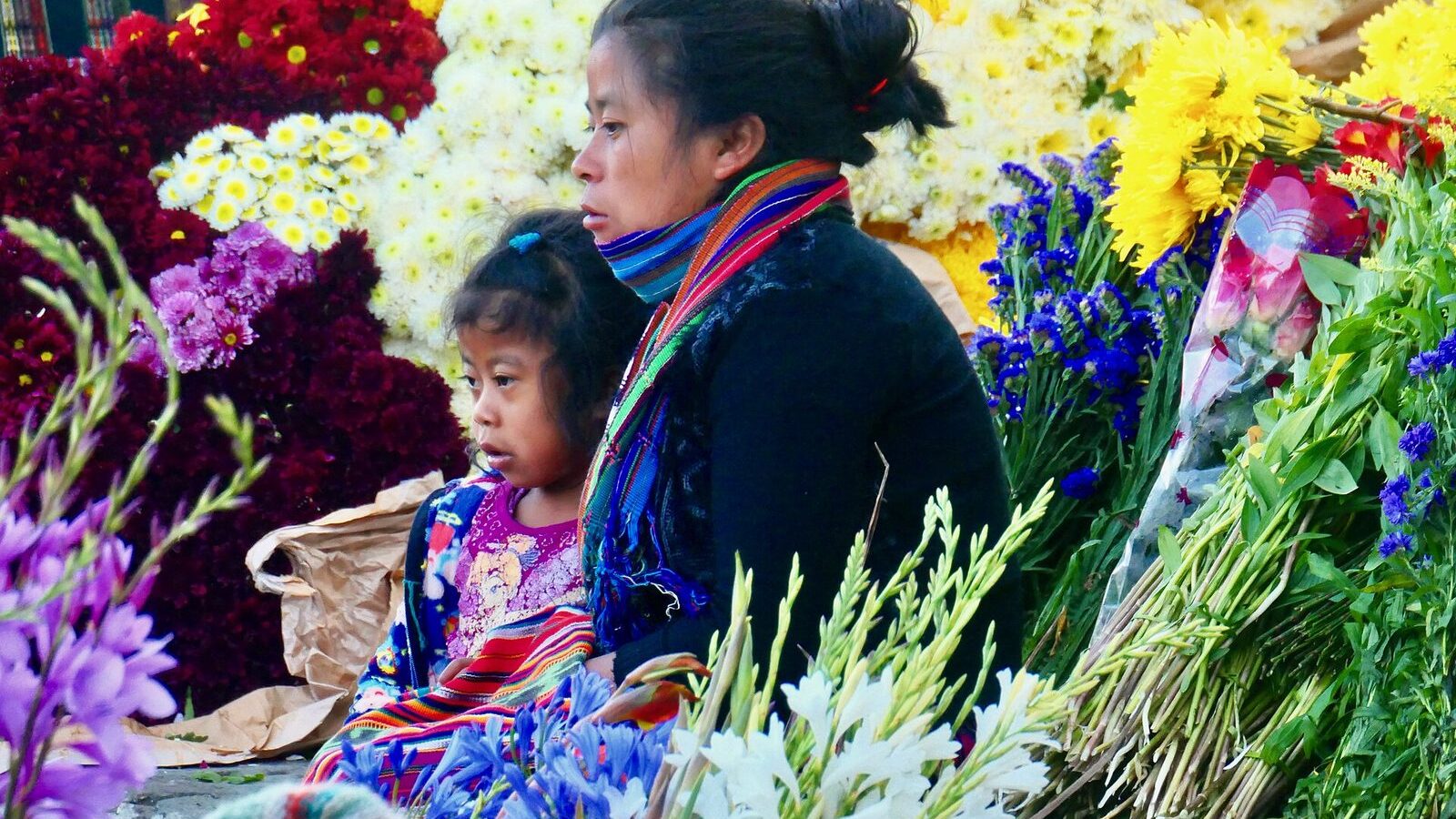
The market has two halves that are worth distinguishing. The outer ring, nearest the main access roads, is aimed at visitors: textiles, masks, carvings, jade. The inner part, closer to the church and spilling into the covered hall, is where local people actually shop — vegetables, chillies, live poultry, tools, medicinal plants and flowers.
The second half is the more interesting, and it is where you understand that this is a working market and not a craft fair.
Textiles
The main draw. Look for huipiles — the woven blouses, each village with its own pattern — plus shawls, table runners and bags. Hand-woven on a backstrap loom costs many times more than machine-made, and the difference is visible on the reverse: handwoven has no floating threads and no printed look.
An authentic second-hand huipil that has actually been worn is often better value, and more interesting, than a new piece made for sale.
How to haggle
Haggling is expected in the tourist section and not in the food market. Ask the price, offer somewhat less, settle in the middle. Do it with good humour and without grinding people down over small sums — these are hours of work, and the margins are thin.
Buying several things from one seller usually gets a better price than haggling hard over one.
Santo Tomás church
The white church on the eastern side of the square is the other reason to come. Built in 1540 on a pre-Columbian platform, it is where Catholic and Maya practice openly coexist: K’iche’ prayer-makers burn copal incense and candles on the steps, and inside, offerings are laid on the floor along the nave.
The main steps are reserved for ceremony: enter by the side door. Photography inside is not welcome, and you should not photograph people praying. This is a functioning religious site, not an attraction.
Also worth seeing
- Pascual Abaj: a Maya shrine on a hill above the town where offerings are still made. Go with a local guide.
- The cemetery: tombs painted in bright colours, on the slope above town.
- Capilla del Calvario, the smaller chapel facing Santo Tomás across the square.
Practical advice
- About two and a half to three hours from Antigua, and around an hour and a half from Panajachel. Shuttles run on market days.
- Ask before photographing people. Many will say no, and some will ask for a small payment. Both are fair.
- Watch your bag in the crowds and carry small notes.
- It sits above 2,000 metres: cold in the morning, strong sun by midday.
- Most people visit on a day trip, but staying the night lets you be there at dawn when the sellers set up.