Panamanian cooking is what you would expect of an isthmus half the world has passed through: an indigenous base of maize and cassava, Spanish inheritance, African and West Indian contributions, and a Chinese undercurrent left by the thousands of workers who built the railway and the canal. The result is simple, filling and very good.
These are the dishes not to miss.
Sancocho, the national dish
A broth of free-range hen with yam and culantro, served with white rice on the side. It looks simple and is not: the yam breaks down and thickens the broth, and Panamanian culantro — a long-leafed herb, not the common coriander — gives it an aroma unlike any other sancocho in the Americas.
It is eaten at any hour and has a reputation for raising the dead: the official remedy for a hangover and for the cold of the small hours.
Breakfast
- Hojaldres. Flat, puffy fried dough. This is the bread of a Panamanian breakfast and it goes with everything.
- Tortilla de maíz. Nothing like the Mexican kind: here it is thick, made of ground maize and fried, closer to a cake.
- Carimañolas. Rolls of boiled, mashed cassava stuffed with minced meat and deep-fried. The best thing on the street-food stalls.
- Bistec picado. Strips of beef stewed with onion and pepper, with hojaldre to mop it up.
Fonda dishes
- Ropa vieja. Shredded beef stewed in tomato sauce, with rice and patacones.
- Arroz con pollo. The dish of every Panamanian celebration, with peas, olives and capers.
- Guacho. A soupy rice with beans and salt beef or seafood, typical of the coast. Somewhere between rice and stew.
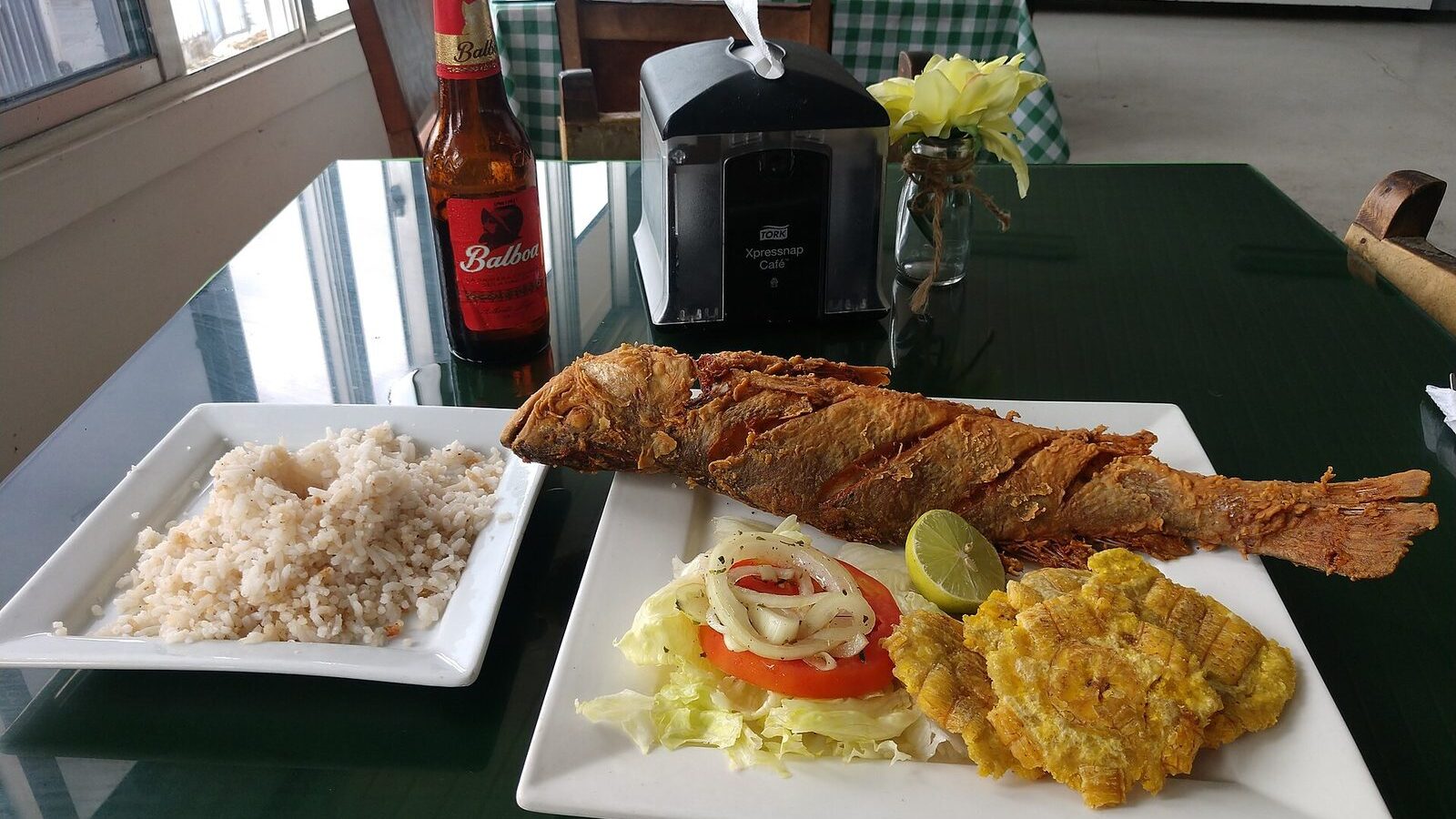
- Patacones. Slices of green plantain flattened and fried twice. They accompany almost everything.
- Panamanian tamal. Maize dough with chicken or pork, wrapped in plantain leaf. Essential at Christmas.
From the sea
Panamanian ceviche is served in a plastic cup, eaten with salted crackers and taken mid-morning. Corvina is the classic; octopus is the one that gets you hooked. The Mercado de Mariscos in the capital has dozens of stalls and the catch is from that same morning.
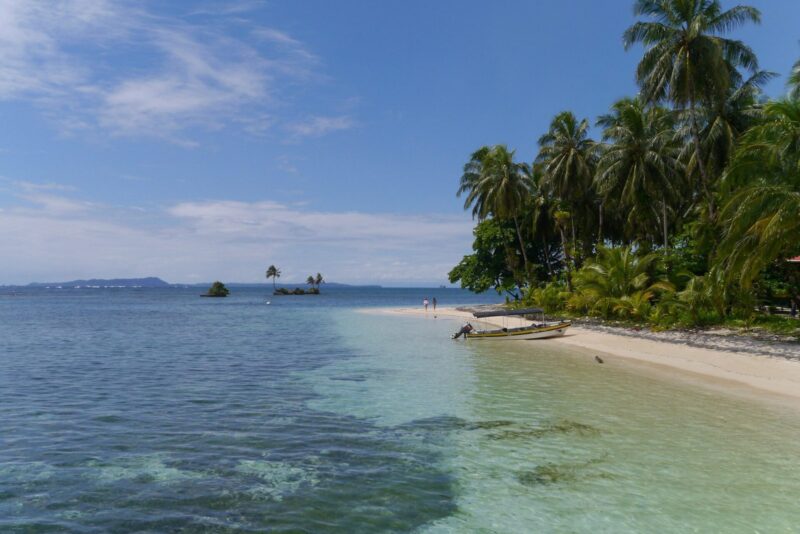
On the Caribbean the cooking changes completely: coconut arrives. Try rondón, a fish stew with coconut milk, root vegetables and plantain, and the coconut rice of Bocas del Toro.
Sweet things and drinks
- Raspado. Shaved ice with coloured syrups and condensed milk poured over the top.
- Chicheme. A thick maize drink with milk, cinnamon and vanilla. Served cold and surprisingly filling.
- Bienmesabe. Rice pudding with coconut, typical of the interior.
- Seco Herrerano. The national spirit, made from sugarcane. Drunk with milk and ice, however odd that sounds.
- Geisha coffee. If you are in Boquete, pay for the tasting. It is a different experience.
Where to eat well and cheaply
Look for fondas: plain places with the day’s menu on a blackboard and a display case of pots. You point at what you want and pay very little. They are the best value in the country and where working people eat.
In the capital, the Mercado de Mariscos for ceviche and the Calidonia and San Francisco districts for fondas. In the interior, any roadside stop with lorries parked outside.
Prices vary a great deal between the capital, the islands and the interior. Treat any figure as indicative.