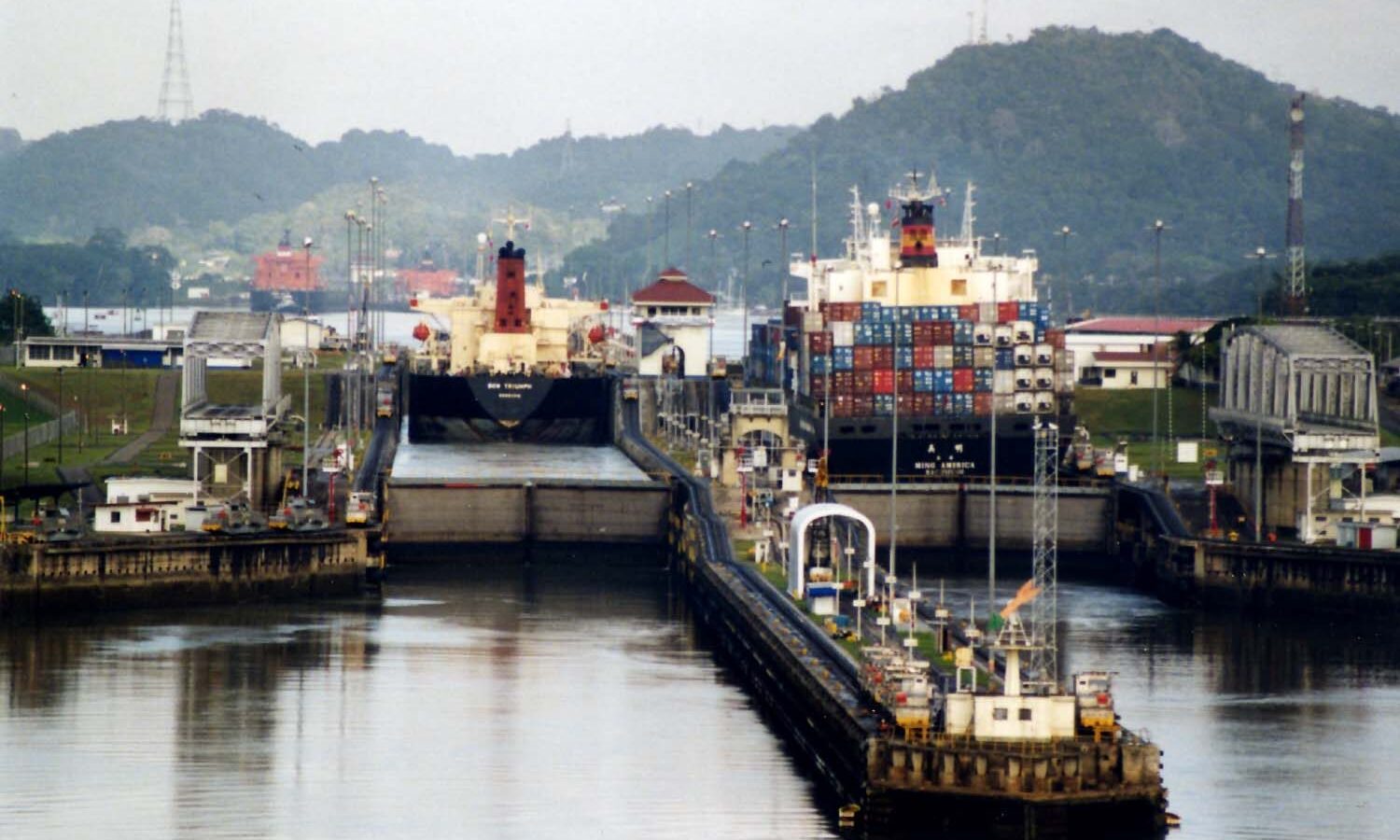
Watching a 300-metre ship rise almost three storeys on nothing but water is one of those things you do not quite believe until it happens in front of you. The Panama Canal has been doing exactly that since 1914, around forty times a day, and it is still the great spectacle of the country.
Visiting is easy and takes half a day, but you have to choose carefully where to go and, above all, at what time. Here are the two options and what to know about each.
How the canal works, in two minutes
The canal is not a trench at sea level: it is a system of locks that lifts ships up to Gatún Lake, about 26 metres above the sea, carries them across the isthmus on that artificial lake and then lowers them to the other ocean. Each lock cycle moves an enormous volume of fresh water by gravity alone, with no pumps.
The full transit is around 80 kilometres and takes between eight and ten hours. In 2016 an expansion opened with a third set of much larger locks, for the neopanamax vessels that did not fit through the originals.
Miraflores locks (Pacific side)
The most visited and the most convenient: about twenty minutes from central Panama City. The visitor centre has several floors of exhibition, a cinema and — the part that matters — viewing terraces right at the lock wall. The ships pass close enough to read the names off their hulls.
What time to go
This is the detail that makes or ruins the visit. Traffic is not continuous: there are busy windows and dead hours when you will see nothing but empty chambers. As a rule, mid-morning and mid-afternoon tend to concentrate the transits, but the real schedule depends on that day’s traffic.
Check the expected movements before you leave your hotel and plan around a confirmed passage. Turning up to see what happens is the surest way to pay an entrance fee to look at concrete.
Getting there
A ride-hailing app from the centre or from Casco Antiguo is easiest. Buses also drop you on the access road, a short walk from the visitor centre, and nearly every half-day city tour includes it.
Agua Clara locks (Caribbean side)
These sit near Colón, at the Atlantic mouth, and belong to the new set. The big ships pass here, and the viewpoint has one advantage over Miraflores: as well as the locks you see Gatún Lake opening up behind, with vessels waiting their turn.
The drawback is distance: an hour and a half to two hours from the capital. It is worth it if the engineering interests you, if you want to see the largest ships, or if you are combining it with San Lorenzo fort or Portobelo.
Other ways to see the canal
Transit by boat
There are tourist transits covering part of the canal or the full ocean-to-ocean route. A partial transit takes half a day; a full one, essentially a whole day. It is the most complete experience and also the most expensive, and it usually runs only on specific days of the week.
The Panama–Colón railway
The transisthmian railway predates the canal itself and still runs. It crosses the country in just under an hour along the edge of Gatún Lake, with stretches where the train seems to be running on water. It goes out in the morning and back in the afternoon.
Free viewpoints
From the Bridge of the Americas and the Amador Causeway you can see the Pacific entrance with ships at anchor waiting their slot. It is no substitute for the locks, but it makes a fine sunset and costs nothing.
What to combine it with
- Parque Natural Metropolitano: tropical forest inside the city, halfway to Miraflores. Sloths and toucans twenty minutes from downtown.
- Amador Causeway: the road built across islands from the rock excavated for the canal, with skyline views.
- Biomuseo: Frank Gehry’s brightly coloured building at the causeway entrance, devoted to how the isthmus changed the planet’s biology.
- Portobelo and San Lorenzo: colonial Caribbean fortresses, if you go to Agua Clara.
Practical advice
- Check the expected transit schedule on the day before setting out.
- The terraces are open-air and the sun is fierce: hat and water.
- Foreign and resident tickets are priced differently; bring your passport.
- With children, Miraflores wins: shorter, interactive and the ships are close.
- Allow two to three hours on site, plus travel.
Fares and hours change often; confirm on the Panama Canal Authority website before you go.