Belize is the odd one out in Central America. It is the only country in the region where English is the official language, the only former British colony, by far the least populated, and the one with the second largest barrier reef on the planet sitting just off its coast.
Into a territory smaller than many provinces it fits reefs, atolls, jungle with jaguars, sacred Maya caves and a cultural mix that exists nowhere else. Here is how to plan it.
Why Belize feels different
Belize was British Honduras until 1973 and did not become independent until 1981. Hence English as the official language, the steering wheel on the left but driving on the right, and a culture closer to the anglophone Caribbean than to Hispanic America.
Underneath the English you will hear Belizean Kriol, Spanish (widespread in the north and west), Garifuna along the southern coast, several Maya languages and even the German of the Mennonite communities that produce much of the country’s food.
What to see
The barrier reef and the cayes
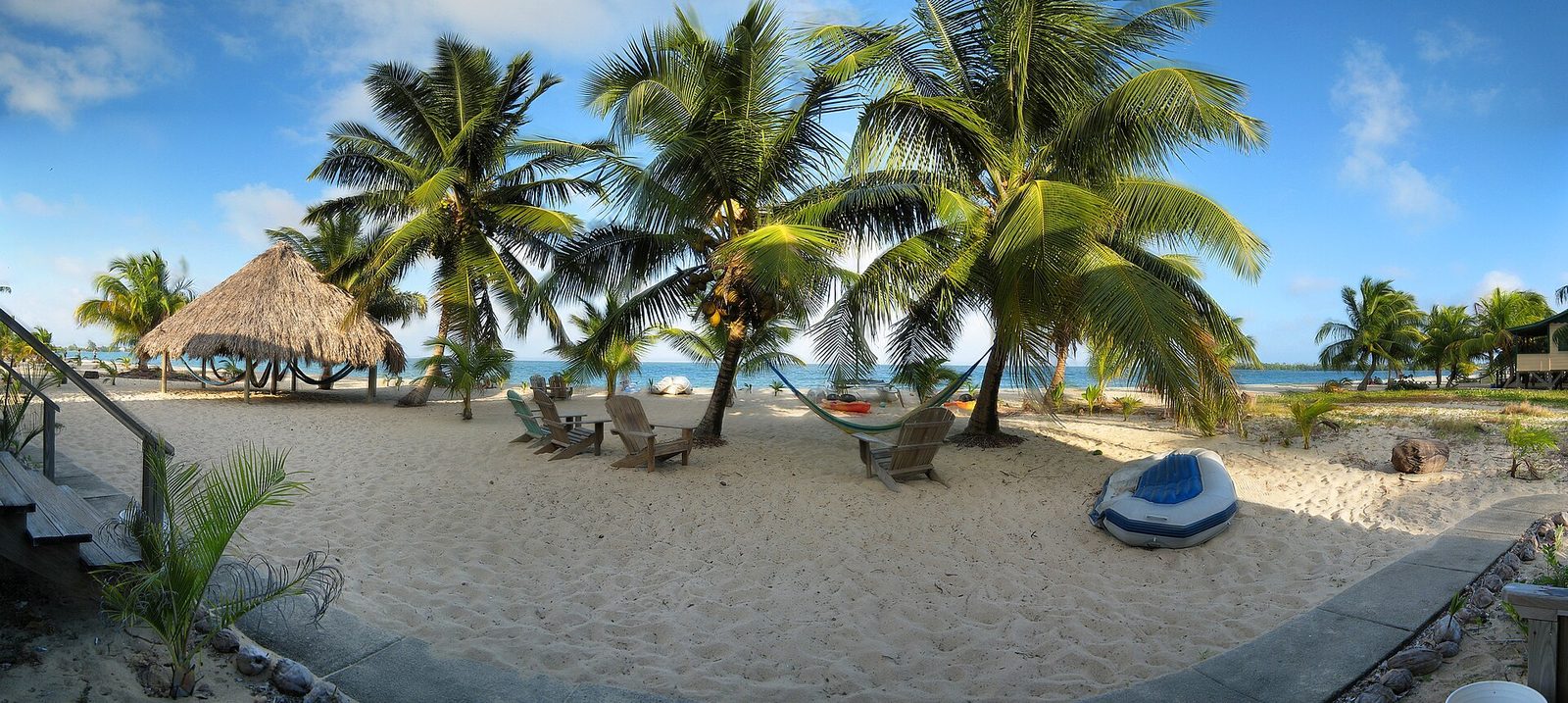
The Belize Barrier Reef Reserve System is a World Heritage Site and the largest reef system after Australia’s. There are hundreds of cayes offshore; the two that matter most to travellers are Caye Caulker, small and slow, and Ambergris Caye, with San Pedro at its centre.
The Great Blue Hole
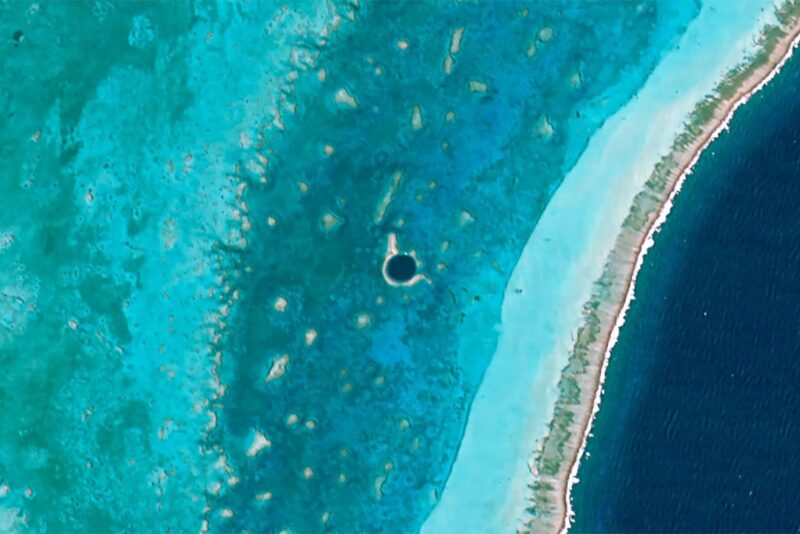
The circular sinkhole Jacques Cousteau put on the map in 1971. It is the country’s defining image, dived as a deep descent and flown over by light aircraft if you are not certified.
The Maya sites
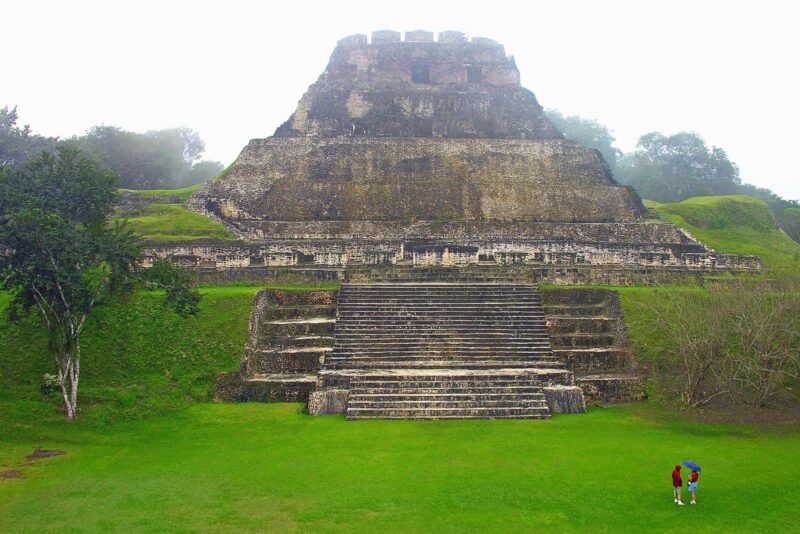
Caracol was one of the great powers of the Maya world and its Caana pyramid is still the tallest structure in Belize. Xunantunich, Altun Ha and Lamanai complete a circuit that is accessible and far less crowded than its equivalents in Guatemala or Mexico.
The caves
For the Maya these were the entrance to the underworld, and they left pottery and human remains inside that are still where they were placed. Cave tubing along the underground rivers of Caves Branch is the most popular activity inland.
The southern coast
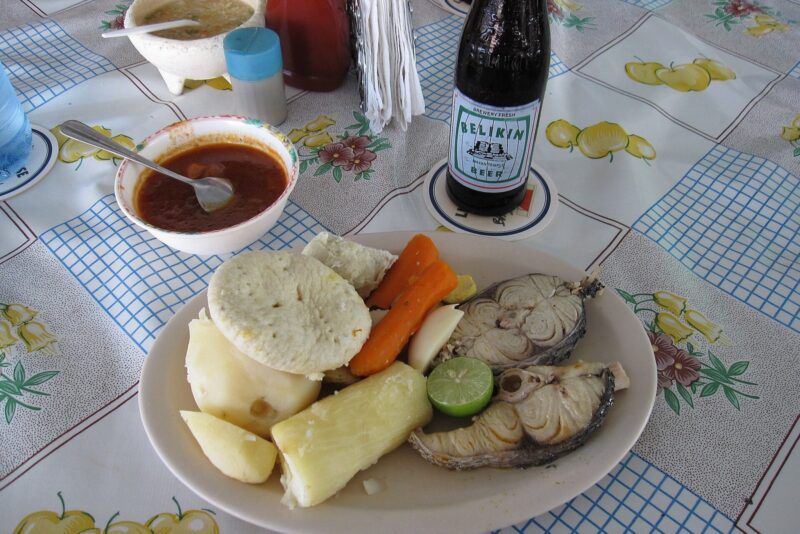
Hopkins and Dangriga are the heart of Garifuna culture, with its own drumming and its own cooking. Placencia has the best mainland beaches, and inland lies Cockscomb Basin, the world’s first jaguar preserve.
How many days you need
- 5 days: one caye plus a trip inland for a ruin and a cave.
- 8 to 10 days: the cayes, the Maya west around San Ignacio, and the Garifuna coast.
- Two weeks: all of that plus serious diving on the atolls and the deep south towards Punta Gorda.
When to go
The dry season runs from December to May and is the best time for the sea and for underwater visibility. From June to November it rains more, and that overlaps with the Atlantic hurricane season, which is watched closely here.
If whale sharks are what you are after, the window is short: they gather around the full moon between April and June, off Placencia.
Getting around
- Water taxis: the normal way to reach the cayes from Belize City. Caye Caulker is about 45 minutes.
- Light aircraft: connect Belize City with the cayes, Placencia and Punta Gorda in a matter of minutes. Expensive, but they save hours.
- Buses: retired American school buses. Extremely cheap, slow and without air conditioning, but they cover the whole country.
- Hire car: useful for the west and the south. There are few main roads and it is hard to get lost; the problem is potholes and unmarked speed bumps.
Money and budget
The Belize dollar is fixed at two to one US dollar, and that peg does not move. US dollars are accepted everywhere. The trick: always ask which currency a price is quoted in, because confusing BZD with USD means paying double.
Belize is expensive for the region, particularly on the cayes and for diving. You can offset that by eating at local stalls and using the buses on the mainland. There is also a departure tax, usually included in your air ticket, but worth confirming.
Safety
The tourist areas — the cayes, San Ignacio, Placencia, Hopkins — are quiet. Belize City is a different matter: it has neighbourhoods with serious violence, and the general advice is not to walk around the south side, not to sleep there if you can avoid it, and to move by taxi.
Most travellers use Belize City only as a transfer point between the airport and the water taxi dock, and they are right to.
Practical details
- Capital: Belmopan, not Belize City.
- Language: English is official; Kriol on the street and Spanish widely spoken.
- Currency: Belize dollar, fixed at 2 to 1 US dollar.
- Plugs: types A and B, 110 V.
- Airport: Philip Goldson (BZE), about 15 km from Belize City.
- Water: stick to bottled outside the hotels.
Fares, taxes and opening hours change every season. Confirm before booking.