Guatemalan cooking is among the richest in Central America. The result of centuries of fusion between ancestral Maya cuisine and Spanish influence, every dish carries a history of tradition and territory. Maize is the absolute protagonist — the Maya considered themselves literally people of maize — but the range of ingredients and techniques will surprise you.
Dishes declared national cultural heritage
These have been formally declared Intangible Cultural Heritage of the Nation. They are the essence of Guatemalan cooking.
1. Pepián
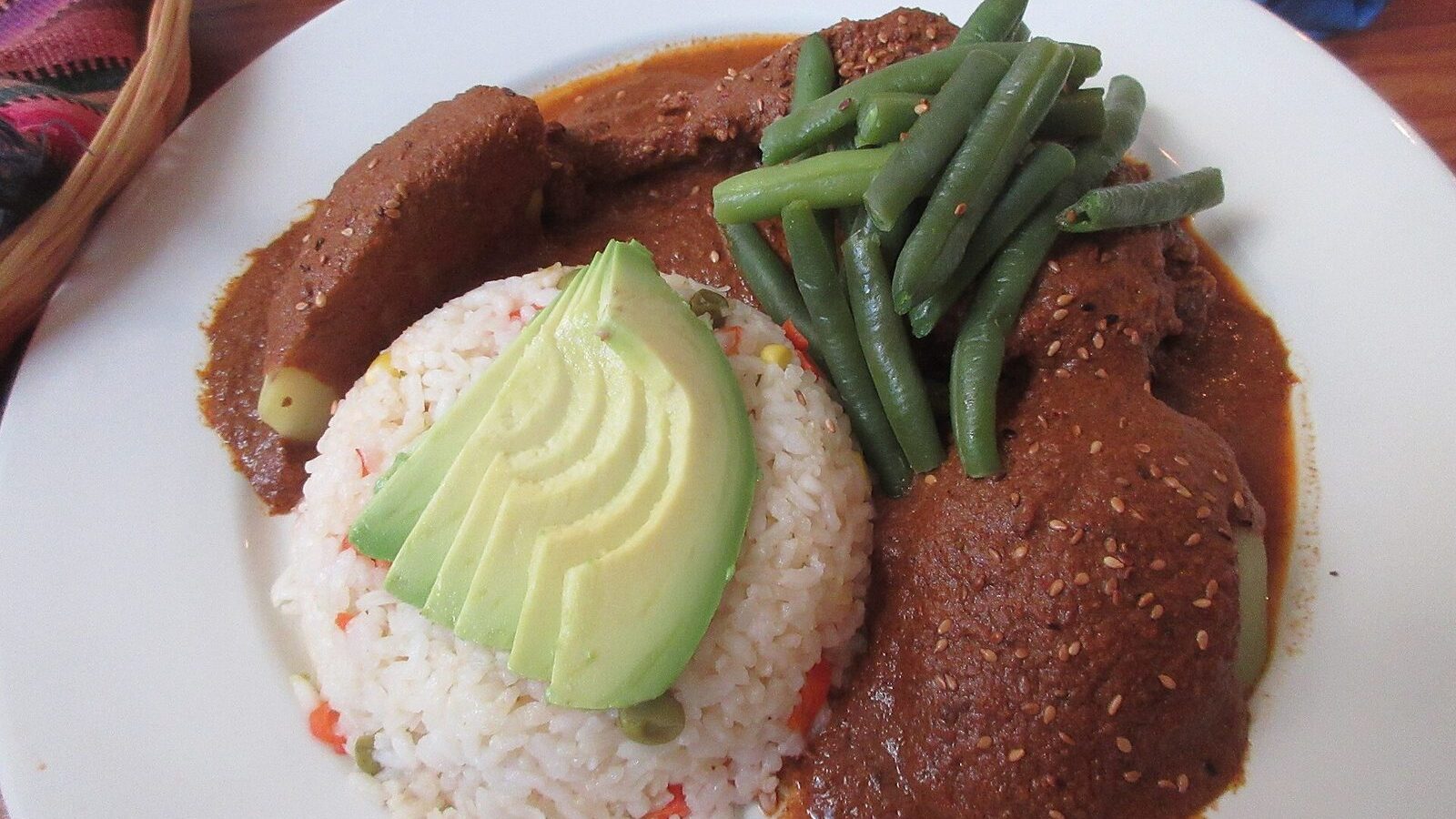
Considered the national dish, pepián is a stew that predates the Spanish and was eaten at major Maya ceremonies. It is a thick recado made from pumpkin seeds — pepitoria, hence the name — toasted sesame, chillies, tomato and spices, served with chicken, beef or pork.
The flavour is complex: earthy, slightly hot and deeply comforting. It comes with rice and fresh tortillas. Any comedor in Antigua or Guatemala City will do it, and the central markets of both cities do it cheaply and well.
2. Kak’ik
An intense red broth from the Q’eqchi’ region, and pure fire. The name says it: kak means red and ik means hot. It is made with turkey, vegetables, spices and generous quantities of chilli. Traditionally served with tamalitos and rice, in Cobán and Alta Verapaz.
3. Jocón
A green stew, coloured by tomatillo, coriander and spring onion, usually with chicken. Lighter and fresher than pepián, and the one to order if you want to understand the Maya side of the cooking rather than the Spanish.
4. Fiambre
A cold salad that can carry fifty or more ingredients — cured meats, sausages, cheeses, pickled vegetables, beetroot, egg — dressed in a vinaigrette. It is made only for 1 November, All Saints’ Day, when families eat it at the cemetery. Each household has its own recipe and there is no chance of finding it at any other time of year.
Everyday plates
- Tapado. A Garifuna coconut and seafood stew from the Caribbean coast around Livingston.
- Hilachas. Shredded beef in a tomato and chilli sauce with potato.
- Subanik. A ceremonial dish of three meats steamed in leaves with a chilli recado.
- Caldo de res. A big beef and vegetable broth, the Sunday lunch.
- Tamales and chuchitos. The first larger and wrapped in plantain leaf; the second small, firm and wrapped in corn husk, sold from baskets.
Street food
- Tostadas. Crisp tortillas topped with guacamole, black bean paste or salsa, sold three for very little.
- Shucos. The Guatemalan hot dog, loaded with guacamole, cabbage and several kinds of sausage. Eaten late at night.
- Elotes locos. Corn on the cob with mayonnaise, cheese and chilli.
- Rellenitos. Sweet plantain dough stuffed with sweetened black bean and fried. Better than it sounds.
- Garnachas and dobladas from any market stall.
Sweet things and drinks
- Atol de elote and atol blanco, thick maize drinks sold from pots on street corners.
- Dulces típicos: the crystallised fruit and coconut sweets sold around Antigua’s convents.
- Mole de plátano. Fried plantain in a chocolate and sesame sauce.
- Guatemalan coffee. Among the best in the world — Antigua, Huehuetenango and Cobán are the great growing regions. Ironically, most of the good beans are exported, so seek out a specialist café.
- Ron Zacapa and Gallo beer, the national spirits.
Where to eat
Central markets, in any city, are where the best value and the most authentic food is. In Antigua the market on the west side; in Guatemala City, the Mercado Central. Look for the stalls with the longest local queue and order whatever the pot holds.
Prices vary between the capital, the highlands and the coast. Treat any figure as indicative.