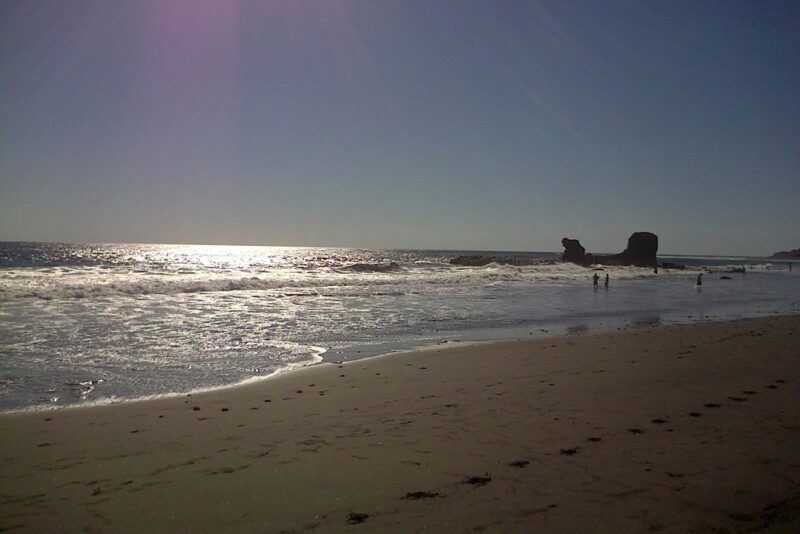
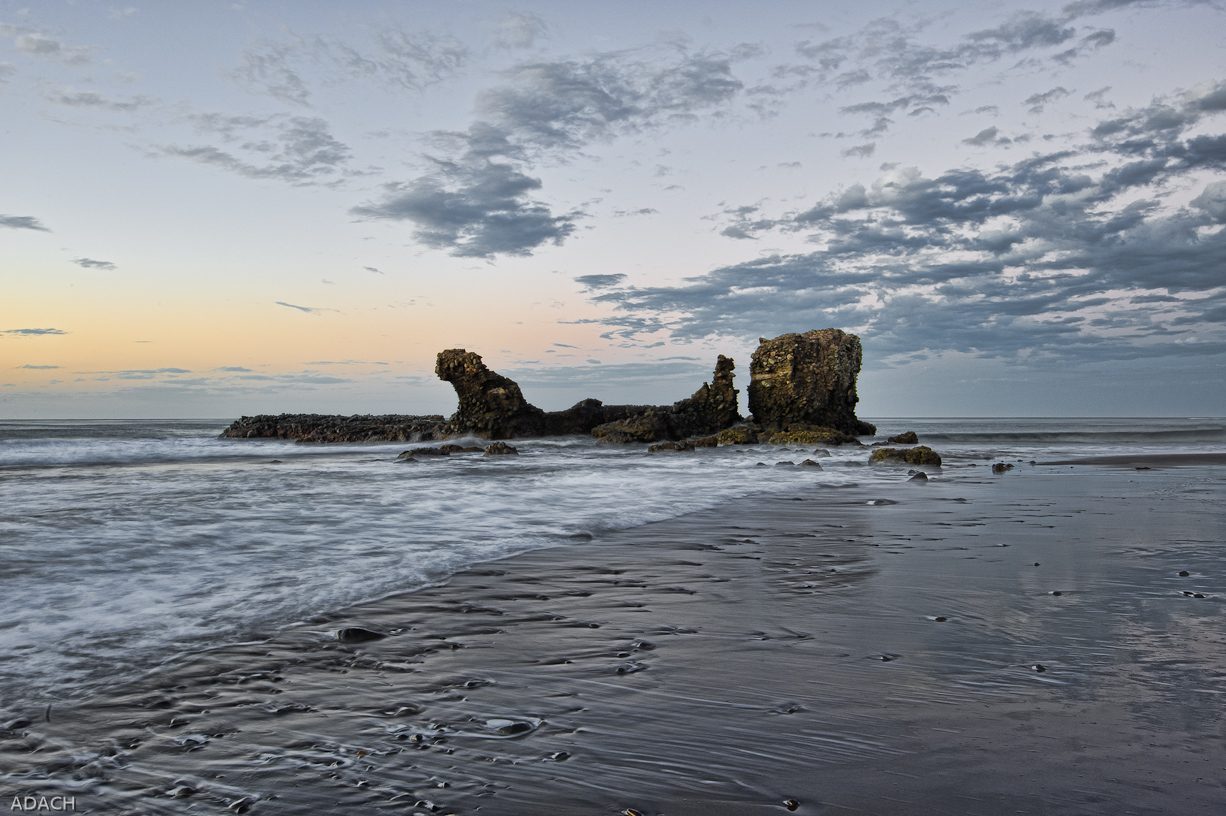
El Tunco is a village of two dirt streets, black sand and a rock in the water shaped like a sleeping pig, which is where the name comes from. It is also, by a wide margin, the centre of beach tourism in El Salvador.
It sits about 45 minutes from the airport, has waves on both sides and fills in season with surfers from half the world. If you are coming to El Salvador for the sea, you will almost certainly pass through here.
Surfing at El Tunco
The village sits between two very different breaks, and that is its appeal.
La Bocana
To the east, at the river mouth. It breaks both ways over a cobble bottom the river rearranges after every flood. It is powerful, fast and considerably more demanding than it looks from a bar terrace. There is current in the mouth: not a place to experiment.
El Sunzal
A ten-minute walk west. A long, mellow, forgiving right and one of the best longboard waves in the region. This is where you will be taken if you book a lesson.
Nearly every school in the village offers lessons with board and reef boots included, and hires gear by the hour or by the day. Haggle lightly, and check that the instructor actually gets in the water with you.
What else to do
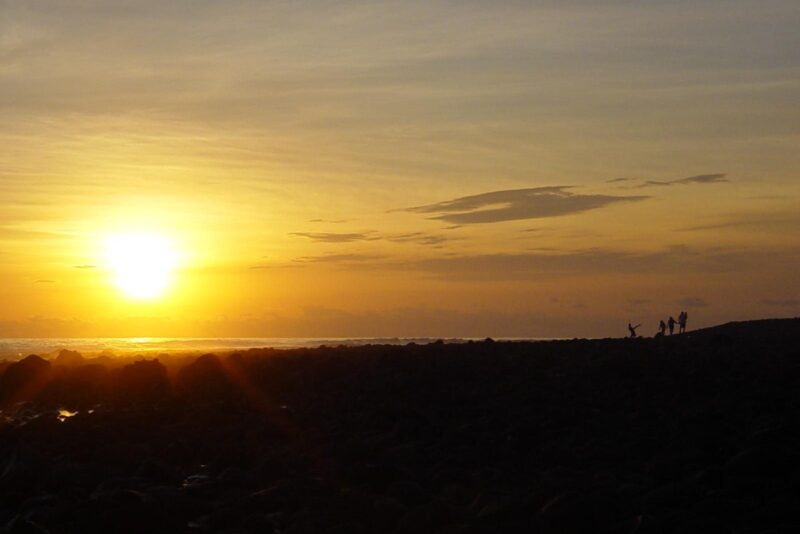
- Sunset over the rock. The daily ritual. The Tunco formation is silhouetted against the sun and the sand fills up.
- Poza del Sol and the Tamanique waterfalls. Half an hour inland, a short route with falls and pools to swim in. Go with a local guide.
- Los Cóbanos. The most important rocky reef on the Central American Pacific, a little over an hour away. Snorkelling and diving.
- La Libertad port. Fifteen minutes away, with a fishermen’s pier where you buy seafood straight off the boats.
- A day trip to Santa Ana volcano or the Flores, El Salvador: a guide to the five towns”>Ruta de las Flores: both around two hours, both doable in a day.
Where to stay
There is everything in very little space: dorm hostels by the river, small hotels with pools, and upmarket places out on the El Sunzal point. The village is tiny, so all of it is within walking distance.
One warning: at weekends El Tunco is loud. Music from the main street carries late. If you want quiet, sleep at El Sunzal or El Zonte and come down for dinner.
Where to eat
The main street is lined with international menus aimed at travellers. For local food at local prices, look for the pupuserías on the side streets and the comedores on the road to La Libertad.
The seafood here is excellent and inexpensive: order the whole fish of the day, fried, with rice and salad. And do not leave without eating pupusas at a roadside stall, which is where they are best.
Getting there
From the international airport, about 45 minutes on the coast road. Most hostels arrange shared transfers that cost far less than a taxi.
From San Salvador, around an hour. By public bus the route goes via La Libertad and requires a change; it is cheap but slow, and it does not run at night.
Practical advice
- The sand is black and volcanic: at midday it burns. Wear sandals to the water’s edge.
- Reef boots to get in: the bottom is cobble.
- There are ATMs in La Libertad, not always in El Tunco. Arrive with cash.
- Two or three nights is enough for the beach; a week if you are surfing seriously.
- Tap water is not drinkable.