Salvadoran cooking is a fusion of Pipil and Maya tradition with Spanish influence, built around maize. The famous pupusas are only the start.
Pupusas, the national dish
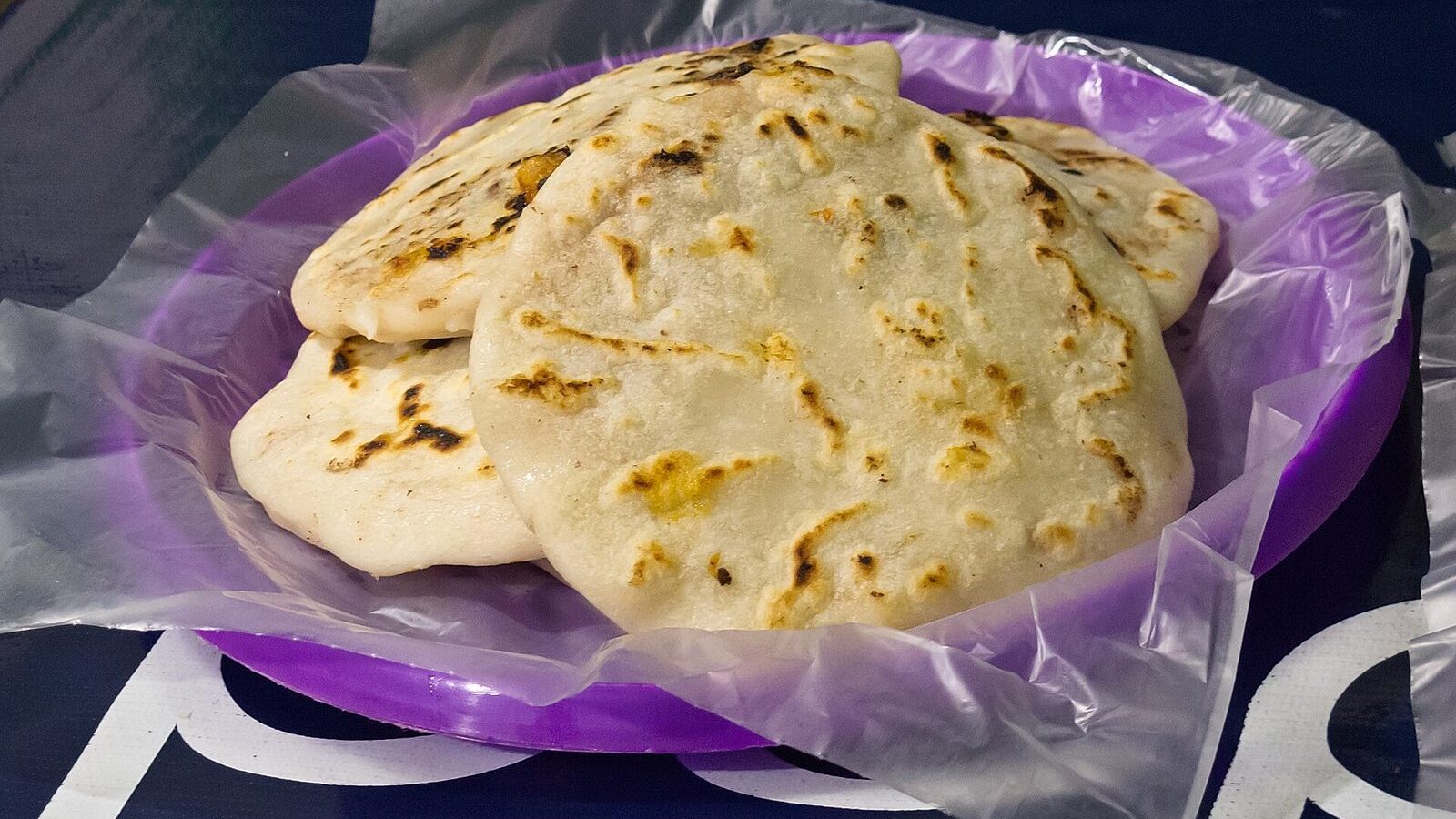
Pupusas are the heart of Salvadoran food, declared the national dish in 2005. The second Sunday in November is National Pupusa Day across the country.
What a pupusa is
A thick cake of maize (or rice) dough stuffed with filling and cooked on a griddle. It is served hot with two things, always:
- Curtido: fermented cabbage slaw with carrot, oregano and vinegar.
- Tomato sauce: a thin cooked salsa with local spices.
The fillings
- Queso: the simplest, with fresh Salvadoran cheese.
- Frijol con queso: refried beans ground with cheese.
- Chicharrón: seasoned ground pork.
- Revuelta: cheese, beans and pork together — the most popular.
- Loroco: a native edible flower with a distinctive flavour, with cheese.
- Ayote (sweet squash with beans) and mora (an edible green).
Maize or rice
Maize pupusas are the traditional kind, denser and more strongly flavoured. Rice pupusas come from Olocuilta, are lighter and crisper, and many Salvadorans consider them the best in the country.
Where to eat them: pupuserías are on every corner. Olocuilta, on the road to the airport, is the place for rice pupusas. On the Flores, El Salvador: a guide to the five towns”>Ruta de las Flores, the Juayúa festival does gourmet versions. Expect to pay well under a dollar each at a roadside stall.
The rest of the table
Yuca con chicharrón
Cassava, fried or boiled, served with crisp pork, pepescas (small fried fish) and curtido. A substantial lunch, found in markets and comedores everywhere.
Salvadoran tamales
Different from the Mexican kind and wrapped in plantain leaf: tamal de gallina with chicken, olives, capers, potato and chilli; tamal de cerdo with pork and vegetables; tamal pisque, smaller, made with beans and chilli; and the sweet tamal de elote from young maize. Traditionally eaten for Sunday breakfast or at festivals.
Sopa de gallina india
A substantial broth of free-range hen with vegetables and spices, regarded as restorative and eaten at any hour.
Panes con pollo
A sandwich that is really a full meal: bread filled with slow-cooked chicken in a spiced relajo sauce, with watercress, cucumber and radish. Sold from stalls in the evening.
Mariscada
A rich seafood soup with coconut milk, eaten on the coast. The dish to order at La Libertad or El Sunzal after a morning in the water.
Other things worth ordering
- Empanadas de plátano: sweet plantain filled with milk custard or beans.
- Riguas: young maize cakes grilled in plantain leaf.
- Nuégados: fried cassava dough in cane syrup.
- Quesadilla salvadoreña: nothing like the Mexican one — a sweet cheese cake eaten with coffee.
- Atol de elote and atol shuco, the second a dark, savoury maize drink.
- Horchata salvadoreña: made with morro seed, not rice, and quite unlike its Spanish namesake.
Where to eat
Comedores and market stalls are where the good food is, and they cost very little. The Juayúa weekend food festival is the single best place to try many things at once. On the coast, order whatever came off the boats that morning.
Prices vary between the capital, the coast and the interior. Treat any figure as indicative.