After days of sticky heat on the coast, arriving in Boquete is a physical relief. This town in the Chiriquí highlands sits at around 1,200 metres, smells of roasting coffee, and fills each afternoon with a fine mist locals call bajareque that, with sun behind it, throws rainbows across the valley.
It is Panama’s mountain destination and the base for climbing the highest point in the country.
Volcán Barú
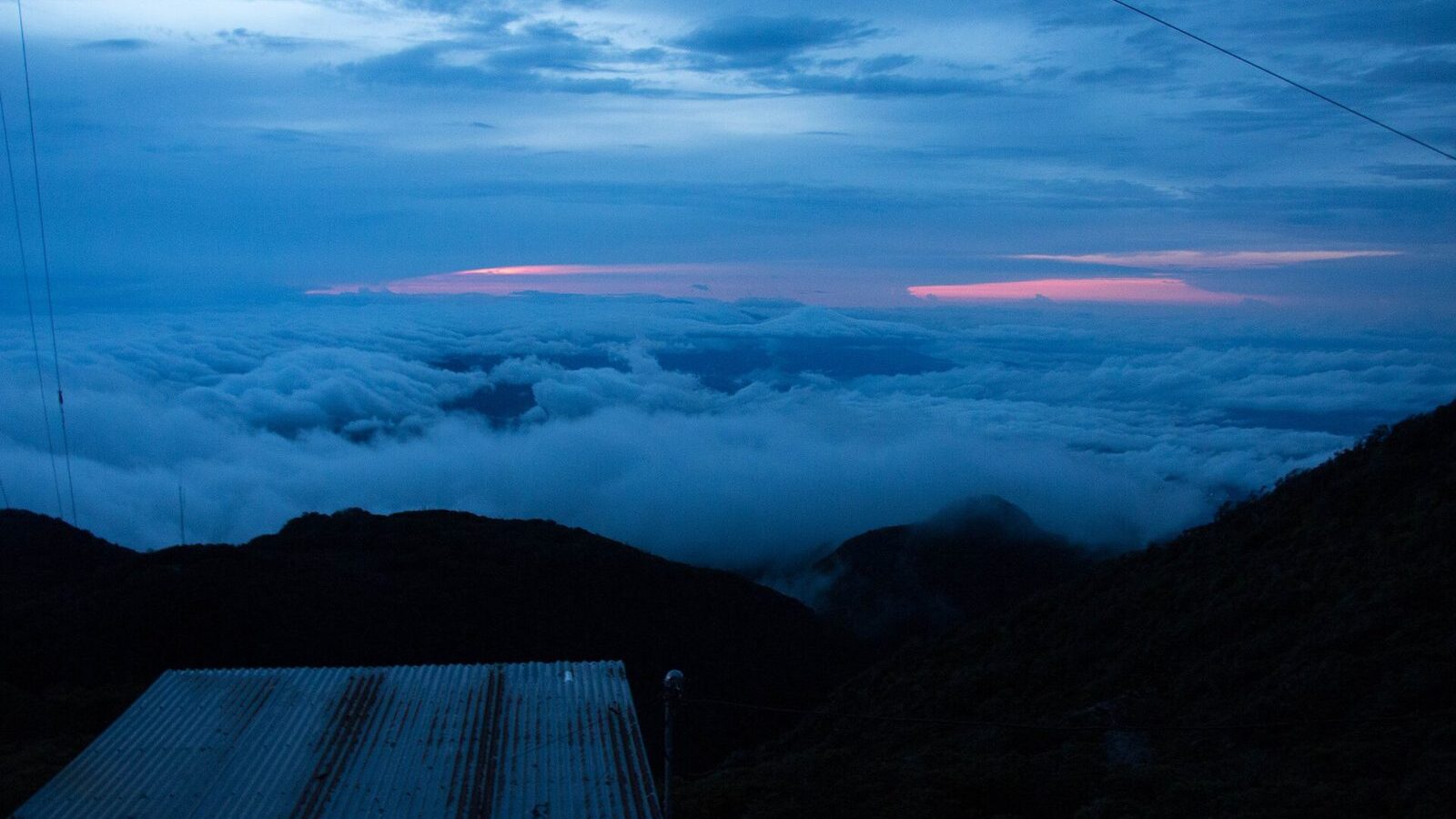
At 3,475 metres, Barú is the summit of Panama and carries an unusual prize: on a genuinely clear day you can see both oceans at once, the Pacific and the Caribbean. It does not happen often, but when it does it justifies the sleepless night.
On foot
Around 13 or 14 kilometres of continuous climbing on a rough track, with more than 1,800 metres of ascent. The classic approach starts around midnight so you reach the top for sunrise: five to seven hours up and four or five down.
It is not technical, but it is long and monotonous, and it is genuinely cold at the top — near freezing with wind. Hat, gloves, layers and a head torch with spare batteries.
By 4×4
Four-wheel drives go up the track before dawn. It is the sensible option if you are not going to walk for eight hours or if you are short of time. You still leave at night.
The Quetzal Trail
The finest walk in the country: about 8 kilometres of cloud forest between Boquete and Cerro Punta, crossing Volcán Barú National Park. The name is not decorative — the resplendent quetzal lives here, and the best season to see one runs February to May, when they nest.
It is better walked from Cerro Punta to Boquete, since that way most of it is downhill. You need to arrange transport back, and a guide is advisable: the signage is poor and walkers have got lost here.
Geisha coffee
The farms around Boquete grow the geisha variety, which at specialty auctions has fetched some of the highest prices per pound anywhere in the world. Altitude, volcanic soil and the bajareque combine into conditions that are hard to replicate.
Almost every farm runs a guided tour with a tasting: you walk the plantation, see the processing and finish comparing several lots. It is one of the best things to do here even if coffee is not your thing. Book ahead.
What else to do
- Los Cangilones de Gualaca: a narrow rock canyon with turquoise water running through it, half an hour away by car. You can swim.
- Caldera hot springs: simple hot pools beside the river, popular with locals.
- El Pianista and Lost Waterfalls: short cloud forest trails with waterfalls, ideal if you are not climbing Barú.
- Rafting on the Chiriquí river: mid-grade whitewater in the rainy season.
- Zip lines over the cloud forest and birdwatching with a local guide.
Getting there
The usual route is to fly from the capital to David, about 50 minutes, then take a bus or taxi to Boquete, roughly 40 minutes. By road from Panama City it is six to seven hours on the Pan-American, with direct night buses to David.
When to go
The dry season, December to April, is the most reliable for climbing Barú and for the two-ocean view. January brings the Feria de las Flores y del Café, the town’s big festival: excellent atmosphere, but full and expensive accommodation. Book months ahead for those dates.
Always bring a jacket: Boquete genuinely cools down at night and many places have no heating.