Costa Rica is the country that defined ecotourism. With more than a quarter of its territory protected in national parks and reserves, this small nation holds around 6% of the planet’s biodiversity. Active volcanoes, beaches on two oceans, cloud forests full of quetzals and a philosophy compressed into two words: pura vida.
It is still the benchmark destination for anyone who travels for nature and for the outdoors. Here is how to plan it.
Why Costa Rica
- Extraordinary biodiversity concentrated into a fraction of the planet’s land surface.
- Twenty-seven national parks and over a quarter of the country under protection.
- No army since 1948, with the money redirected to education and conservation.
- Two coastlines, Pacific and Caribbean, in a country you can cross in a day.
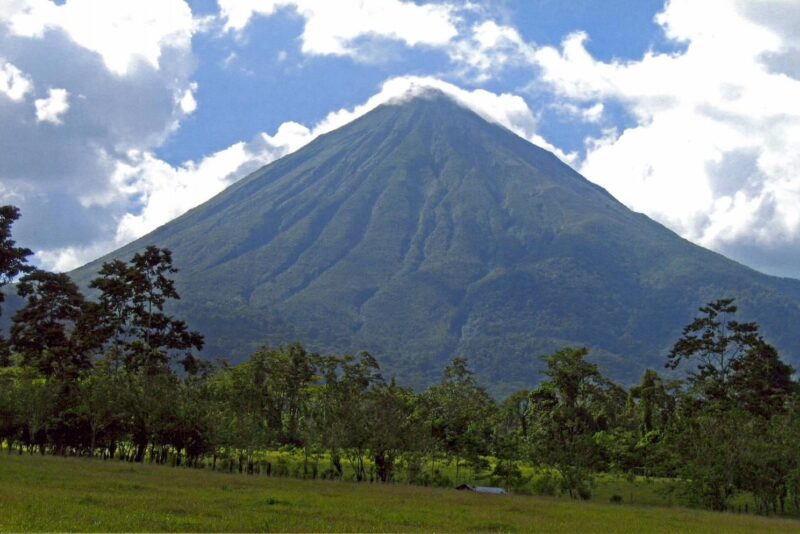
- Volcanoes, several of them active, including the near-perfect cone of Arenal.
- Almost entirely renewable electricity, and a genuine claim to leadership in sustainable tourism.
The main destinations
La Fortuna and Arenal volcano
The most popular adventure base in the country. This small town at the foot of Arenal offers hot springs at every price level, the 70-metre La Fortuna waterfall, the trails of Arenal Volcano National Park, zip lines, rafting and canyoning, and Lake Arenal for kayaking and windsurfing.
It is about 133 km from San José, roughly three hours by road.
Monteverde
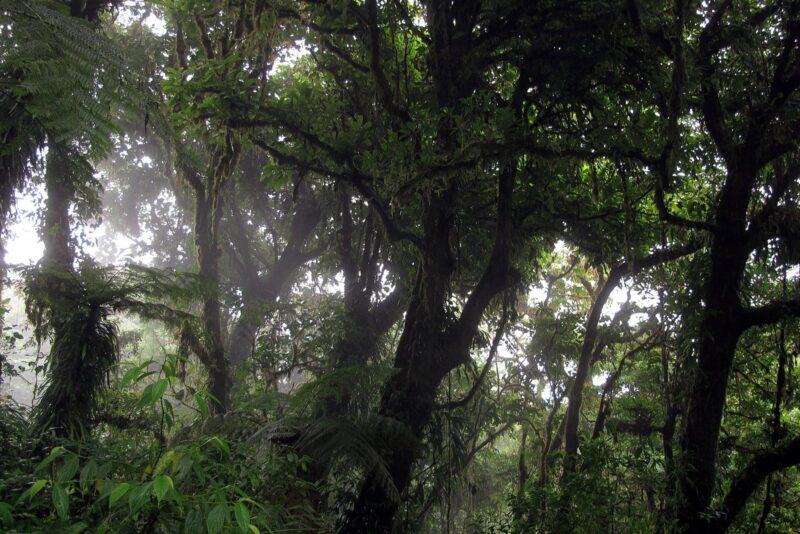
The cloud forest sanctuary and the birthplace of Costa Rican ecotourism. The reserve is overwhelmingly primary forest and home to the resplendent quetzal; there are hanging bridges through the canopy, more than four hundred bird species, the original commercial zip line and a string of butterfly gardens and serpentariums.
The community was founded by American Quakers in the 1950s, and their conservation legacy still shapes the place.
Manuel Antonio
The most visited national park in Costa Rica and also the smallest, combining beaches with rainforest that comes right down to the sand. White-faced capuchins, endemic squirrel monkeys, sloths and toucans, on easy trails that suit families. Entry is by advance reservation with a daily cap.
Guanacaste and the Pacific beaches
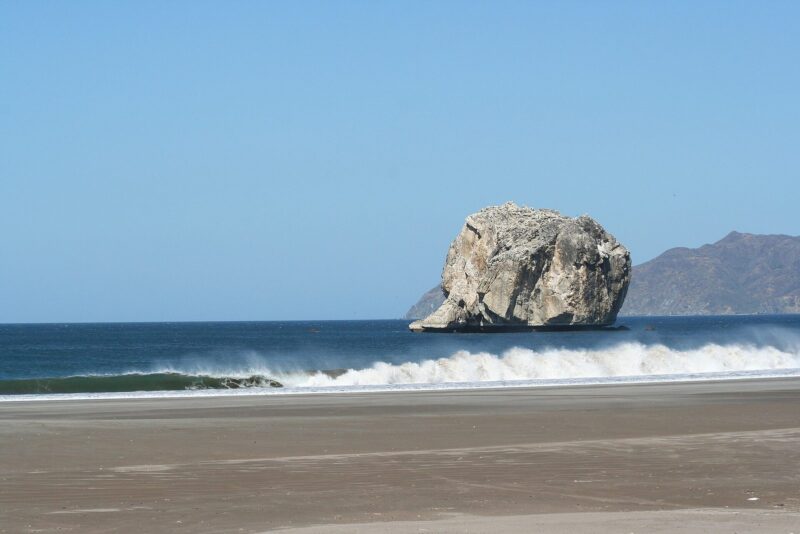
The north-western province has the country’s most developed beach scene: Tamarindo for surf and nightlife, Playa Flamingo for comfort and watersports, Playa Conchal with its crushed-shell sand, Nosara for yoga and wellness, and Santa Teresa for world-class waves and a bohemian crowd. Liberia international airport puts all of it within an hour.
Tortuguero
On the Caribbean side, the most important sea turtle nesting site in the western hemisphere. Green, leatherback, hawksbill and loggerhead turtles come ashore between July and October. There are no roads: you arrive by boat or by air, and you explore the canals by boat through what locals call Costa Rica’s Amazon.
The Osa peninsula and Corcovado
National Geographic once called Corcovado the most biologically intense place on earth. Jaguars, tapirs, scarlet macaws and four species of monkey live in the last stretch of coastal rainforest in Central America. You reach it from Puerto Jiménez or Drake Bay, and the isolation is the point.
The southern Caribbean: Puerto Viejo
An entirely different country in feel: Afro-Caribbean culture, reggae, rice and beans, and patí pastries. Cahuita National Park protects coral reef, Playa Cocles has the surf, and Gandoca-Manzanillo is the place for snorkelling. The pace is slower than slow.
When to go
Dry season, December to April. The best all-round window: clear skies, ideal for beaches and volcanoes. It is also high season, with more visitors and higher prices.
Green season, May to November. Rain in the afternoons but generally dry mornings. Everything is greener, there are fewer people and prices drop. It is also the season for turtles at Tortuguero.
Note that the Caribbean coast runs on its own weather pattern, with September and October among its driest months.
Money and budget
The currency is the Costa Rican colón (CRC), although US dollars are widely accepted in tourist areas. Check the rate before you travel: it moves.
Costa Rica is the most expensive country in Central America, and by some distance. Accommodation, guided activities and park entry all cost noticeably more than in Nicaragua or Guatemala. You can bring the daily figure down considerably by eating at sodas, the small family-run local restaurants, and by using public buses between towns rather than tourist shuttles.
Getting around
- Hire car: the best option for flexibility. A 4×4 is genuinely useful for some areas, particularly in the green season.
- Tourist shuttles: comfortable door-to-door minibuses linking the main destinations.
- Public buses: cheap and thorough, but slow.
- Domestic flights: useful for the remote corners such as Osa and Tortuguero.
Safety
Costa Rica is one of the safest countries in Latin America. The usual precautions apply: do not leave anything visible in a parked car, be careful on remote beaches after dark, and use the hotel safe. Rip currents on the Pacific beaches are a bigger practical risk than crime.
What to eat
- Gallo pinto: rice and black beans, the national breakfast.
- Casado: the full plate — rice, beans, meat, plantain and salad.
- Chifrijo: pork crackling with beans and pico de gallo.
- Olla de carne: a slow beef and vegetable stew.
- Salsa Lizano: the national condiment, on every table.
Prices, park opening hours and reservation rules change every season. Confirm before you book.