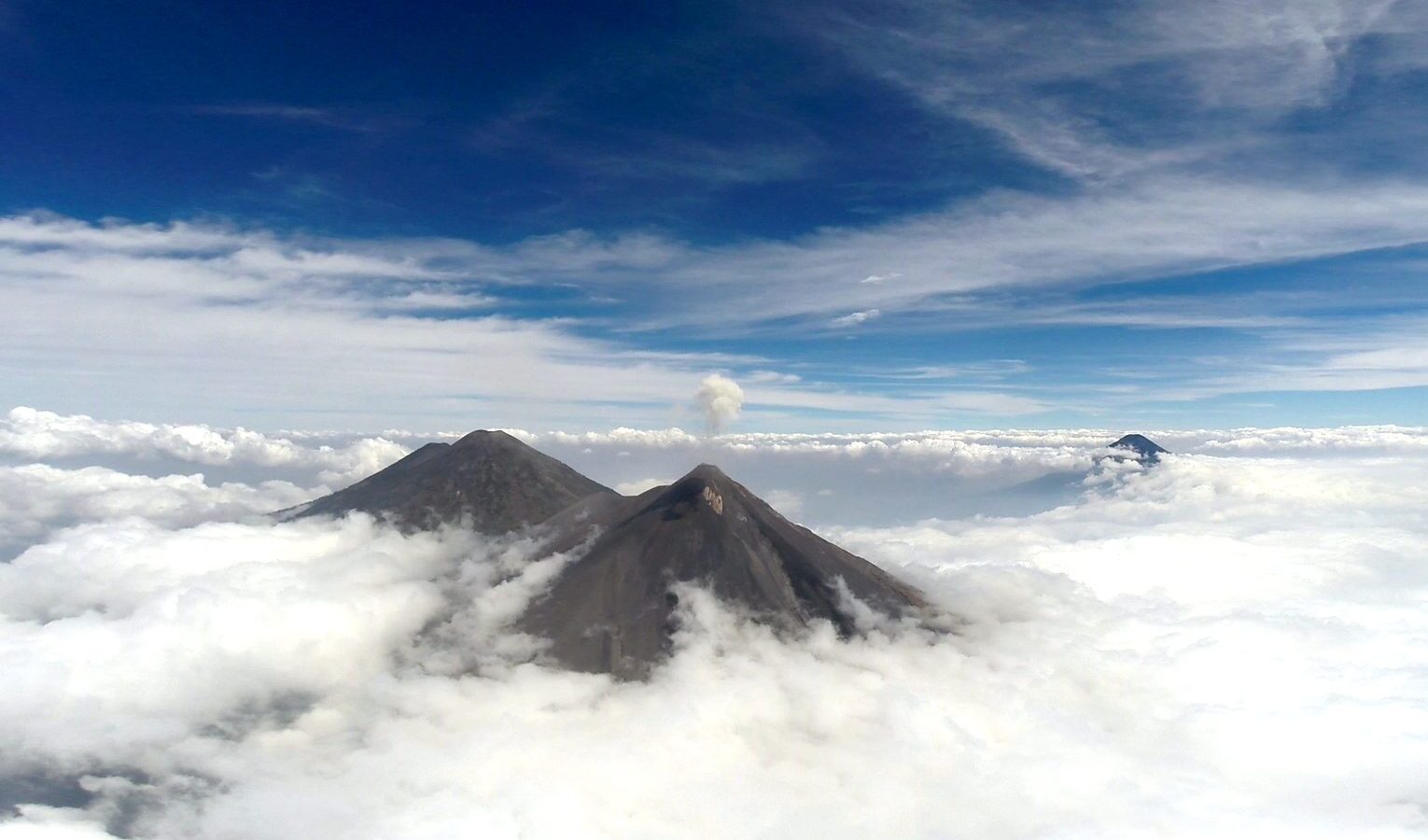
If one experience defines adventure in Guatemala, it is climbing Acatenango. At 3,976 metres it is the third highest volcano in the country, but what makes it extraordinary is its neighbour: Fuego, one of the most active volcanoes on earth, which throws up lava almost every hour.
Camping at 3,600 metres watching Fuego explode in the dark is one of those things that rearranges you. It is hard, it is cold, it is exhausting — and it is unforgettable.
What Acatenango is
Guatemala has 37 volcanoes, and Acatenango forms a massif with Fuego. Acatenango itself is dormant — its last eruption was in 1972 — while Fuego is tremendously active, with small explosions every fifteen to twenty minutes and larger eruptions regularly.
The trek has become one of the most popular experiences in Central America precisely for that combination: a demanding climb, high-altitude landscape and a natural fireworks display next door.
The two-day trek
Day one: up to base camp
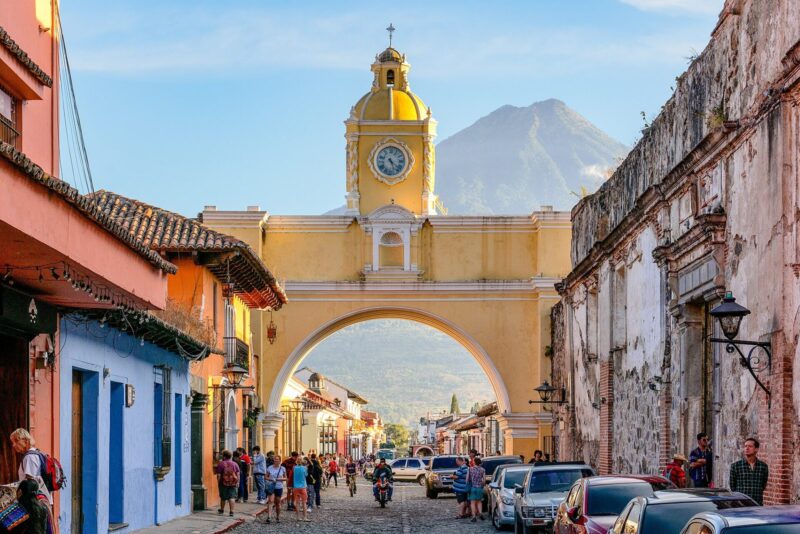
Tours leave Antigua in the morning, generally between 8 and 10. A shuttle takes you to the village of La Soledad, 45 minutes to an hour away, where the walking starts.
From there it is a hard, steep ascent through pine forest and then exposed slope, with regular rest stops. Expect four to six hours to base camp at around 3,600 metres, depending on your fitness and the group.
Once there, the evening is the reward: dinner, a fire, and Fuego erupting in the dark a few kilometres away, close enough to hear.
Day two: the summit
Those who want the summit set off around 4 in the morning for the last hour or so of loose volcanic scree — the hardest part of the whole climb — to be on top for sunrise. From up there you see the volcanic chain, the highlands and, on a clear day, the Pacific.
The descent to La Soledad takes two to three hours and is punishing on the knees.
How hard is it, honestly
Hard. Not technical — no ropes, no scrambling — but a sustained steep climb of over 1,500 metres at altitude, with a heavy pack. Altitude affects people unpredictably at 3,600 metres regardless of fitness.
You do not need to be an athlete, but if you have done no walking in months this will be a rough two days. Porters can be hired at La Soledad to carry your bag, and it is money well spent.
The Fuego ridge option
Some operators offer an additional afternoon hike from base camp out along the ridge towards Fuego, getting considerably closer to the eruptions. It adds about three hours return and is genuinely spectacular.
It also carries real risk. Fuego has had lethal eruptions, and how close is acceptable is a judgement your guide makes. Ask what the operator’s policy is before booking.
What to bring
It gets to near freezing at base camp, with wind. Most people underestimate this badly.
- Thermal layers, fleece, windproof jacket, hat and gloves.
- Three litres of water minimum.
- Head torch with spare batteries.
- Boots or trainers with real grip — the scree is loose.
- Snacks, sunscreen and a power bank; the cold drains phone batteries fast.
Most operators hire out jackets, gloves and sleeping bags at the trailhead. Check what is included before you turn up.
When to go
The dry season, November to April, gives the clearest skies and the best chance of actually seeing Fuego. In the rainy season the summit is often clouded in and the trail turns to mud.
Choose your operator on safety and group size rather than price. The cheapest tours cut corners on equipment and on guide-to-walker ratios, and this is a mountain where that matters.