If one place in Guatemala takes your heart immediately, it is Antigua Guatemala. This colonial city, ringed by volcanoes and full of cobbled streets, was included by National Geographic in its list of the 25 best places to visit in 2025. Having walked it, you understand why.
Antigua is not just another destination. It is a step back in time, an explosion of colour and flavour, and the perfect starting point for the Guatemalan highlands.
Why Antigua matters
Founded in 1543, Antigua was the capital of the Kingdom of Guatemala for more than two hundred years. Earthquakes, eruptions and time have transformed it, but its colonial ruins, baroque churches and distinctive architecture earned it UNESCO World Heritage status.
Today it is a lively city combining history, culture, excellent food and an international traveller scene. You can spend days here and keep finding new corners.
What to see
The Santa Catalina Arch
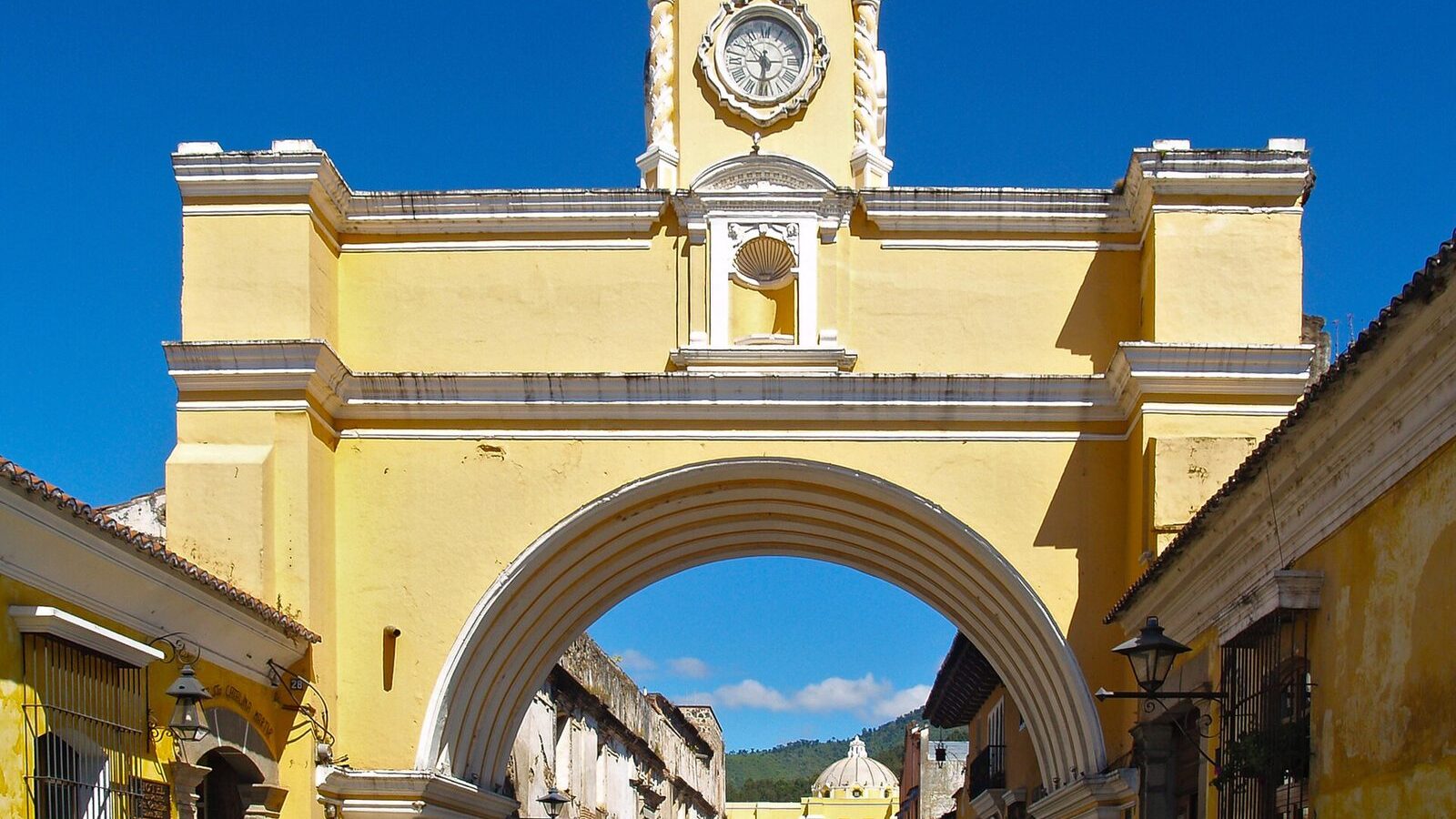
The most photographed thing in Guatemala. This yellow seventeenth-century arch connected the Santa Catalina convent with a school, letting the nuns cross without being seen. It is now the symbol of the city and the spot for the classic shot with Agua volcano behind it.
Go early in the morning or at dusk to avoid the crowds and get the best light.
Parque Central
The heart of Antigua, where locals and visitors, craft sellers and families all converge. The square is framed by the Palace of the Captains General, the cathedral of Santiago and the town hall. At weekends it is at its most colourful.
La Merced church
Its yellow and white façade is a spectacular example of Guatemalan ultrabaroque. It dates from 1767, and the cloister behind holds a fountain shaped like a water lily that is worth the small entrance fee.
The convent ruins
Santa Clara, Las Capuchinas and San Francisco are all worth entering: roofless naves, broken arches and courtyards taken over by plants. They are the physical record of the earthquakes that eventually moved the capital elsewhere.
Cerro de la Cruz
A twenty-minute climb above the city for the postcard view: the grid of tiled roofs with Agua volcano rising straight behind. Go in the morning, and go in company or by tuk-tuk.
Around Antigua
- Acatenango volcano: the two-day trek with the erupting Fuego next door. The single most popular thing travellers do from here.
- Pacaya volcano: a much shorter half-day climb, where you can roast marshmallows on warm ground.
- Coffee farms on the slopes around the city, with tours and tastings.
- San Juan del Obispo and Santa María de Jesús: small villages minutes away with almost no visitors.
- Ciudad Vieja and Hobbitenango for a lighter afternoon.
Where and what to eat
Antigua has the best restaurant scene in the country, from street stalls to serious cooking. Try pepián, the national stew; rellenitos of plantain and bean; and the tamales sold from baskets in the evening around the square.
The market on the west side of town is where you eat cheaply and well. And the coffee here is exceptional — this is one of the great growing regions.
Holy Week
Antigua’s Semana Santa is considered the most spectacular in the Americas: carpets of dyed sawdust laid over the cobbles, floats weighing tonnes carried by dozens of bearers, and processions running more than twelve hours.
If you want to see it, book accommodation months ahead. Prices multiply and the town sells out completely.
Practical advice
- The cobbles are brutal. Flat shoes with grip, and forget wheeled luggage.
- It sits at 1,500 metres: warm days, genuinely cold evenings.
- About an hour from Guatemala City airport by shuttle.
- Two or three nights, more if you are climbing Acatenango or studying Spanish — the language schools here are excellent.