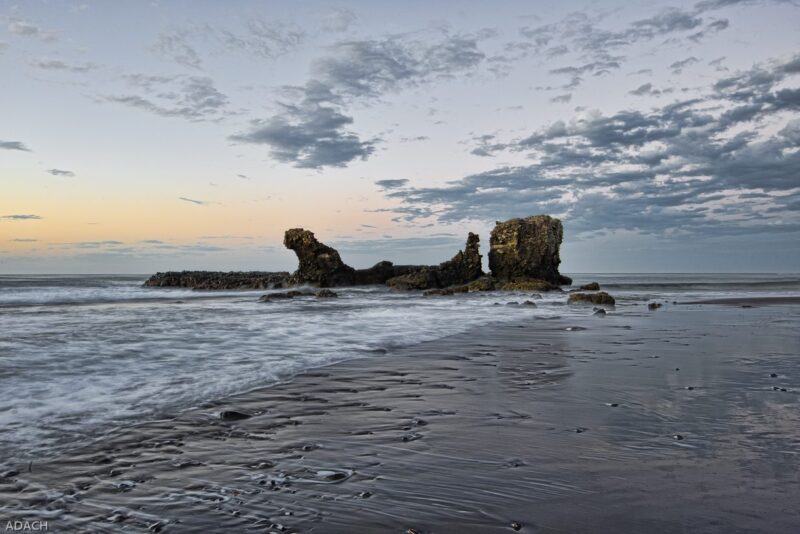
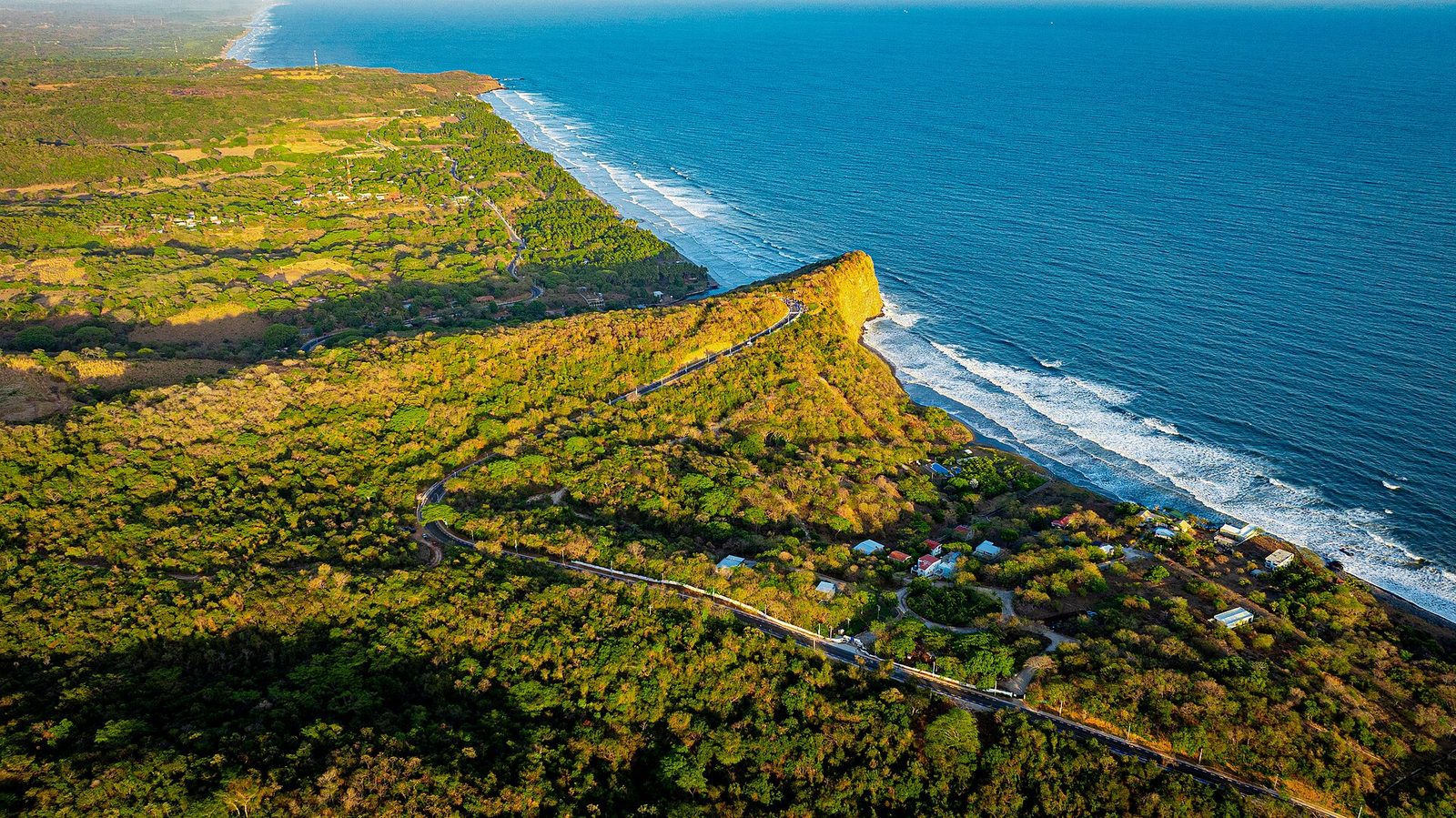
If El Tunco feels too busy, the answer is three and a half hours east. The stretch El Salvador christened Surf City 2 holds some of the finest right-hand points in the country with a fraction of the people in the water.
These are the beaches of Usulután and La Unión departments, close to the Gulf of Fonseca and the Honduran border. Less infrastructure, more nature, and waves that would be crowded on the La Libertad coast.
The waves
Las Flores — intermediate
The star of the east: a right-hand point breaking into a sheltered bay, with long, clean walls over a mixed sand and rock bottom. Friendlier than Punta Roca and longer than most of the La Libertad breaks. On a good southern swell the rides go on and on.
Punta Mango — advanced
Another right-hand point, more powerful and hollower, at the foot of a cliff with vegetation running down to the water. It is normally reached by boat from Las Flores or El Cuco, a short crossing, because overland access is awkward. That keeps the peak nearly empty.
El Cuco and Esterón — all levels
Long sand beaches with gentler breaks and room to spare. El Cuco is the town with the most services in the area and works as a base. Esterón, next to it, is an enormous stretch that is almost deserted midweek — good for learning and for walking for kilometres without meeting anyone.
What else is out here
- Jiquilisco Bay. A UNESCO biosphere reserve with the largest mangrove system in the country and one of the most important olive ridley turtle nesting areas on the Pacific. Explored by boat through the channels.
- Isla de Meanguera and the Gulf of Fonseca. Boats run from La Unión to the gulf islands, with quiet beaches and views of Honduras and Nicaragua at the same time.
- Conchagua volcano. A viewpoint over the whole gulf; on a clear day you see all three countries.
- Playa El Espino and Playa El Icacal: huge, barely visited stretches of sand.
When to go
As elsewhere on the Salvadoran Pacific, the southern swell season runs March to October, biggest between May and August. The east works particularly well on south swells, which is exactly what those months deliver.
Bear in mind it is hotter here than in La Libertad, and in the dry season the landscape turns very arid.
Getting there
From San Salvador it is three and a half to four hours on the Pan-American to San Miguel, then south towards El Cuco. From the international airport, slightly less if you take the coast road.
A car is essentially essential. Public transport reaches the main towns but not the beach accesses, and the timetables do not match the tides. Many lodges arrange airport transfers.
What to expect from accommodation
Everything from simple hostels to a couple of well-run surf lodges offering packages with meals and boat transfers to Punta Mango included. There is far less choice than at El Tunco, so in high season you should book ahead.
There are few restaurants outside the lodges: check whether yours serves meals before counting on going out to eat.
Practical advice
- Bring cash: there are ATMs in San Miguel and La Unión but few on the coast.
- Reef boots and plenty of sunscreen. The sun is stronger here than in La Libertad.
- Phone coverage is patchy at some beach accesses.
- If you are going to Punta Mango, arrange the boat the night before.
- Allow at least three or four nights: it is a long way to come for two days.