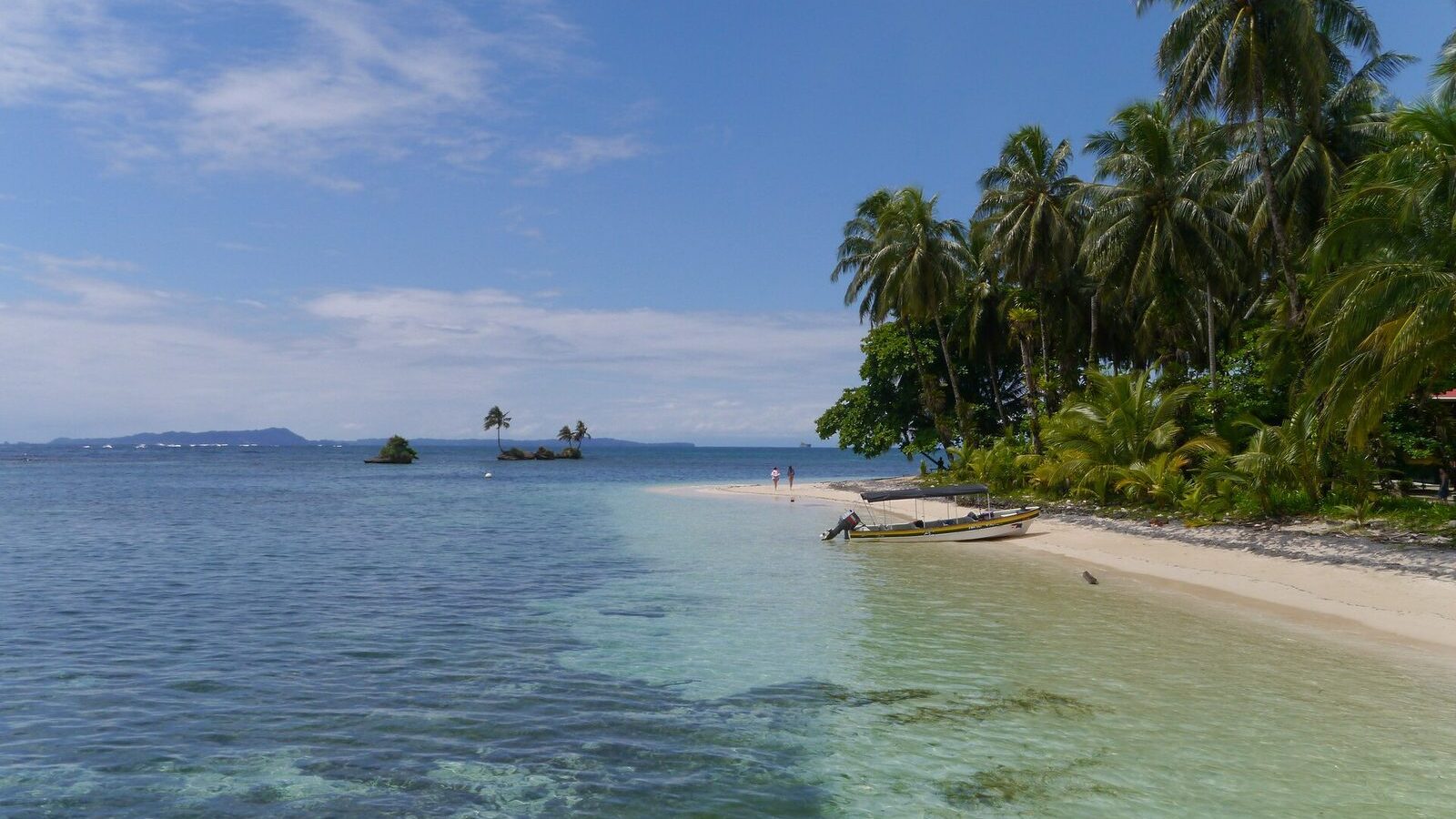
Wooden houses on stilts, turquoise water between the boards, bicycles, reggae in the background and a mix of Afro-Caribbean fishermen, Ngäbe families and travellers who arrived for a week and have been here five years. Bocas del Toro is the Panamanian Caribbean and it resembles nothing else in the country.
The archipelago has nine main islands and dozens of cayes facing the Costa Rican border. The key to the trip is choosing your base well.
Which island to choose
Isla Colón (Bocas Town)
The capital of the archipelago and where the plane and the ferry arrive. It has the hotels, restaurants, banks, supermarkets and all the nightlife. If it is your first time, sleep here: every boat and every tour leaves from Bocas Town.
On the island itself are Playa Estrella, a still-water cove famous for its starfish, and Bluff Beach, a long wild stretch with heavy surf where turtles nest.
Isla Bastimentos
Quieter and greener. This is where you find Red Frog Beach, named after the tiny poisonous red frog living in the forest behind it, and the Bastimentos marine national park. Old Bank, the main village, has a strong Afro-Caribbean character and no roads.
Isla Carenero and Isla Solarte
Five minutes by boat from Bocas Town. Ideal if you want to sleep in peace but eat in town. Carenero has some of the prettiest over-water lodgings in the archipelago.
Cayo Zapatilla
Two deserted cayes inside the national park, with the whitest sand in Bocas. You do not sleep there: they are visited on the day trip, usually combined with dolphin watching and a snorkelling stop.
What to do
- Snorkelling and diving: the coral gardens at Cayo Coral and Hospital Point are shallow and easy. Visibility is best between September and October.
- Surf: Bocas has serious waves. Paunch and Dumpers are for the experienced; Playa Punch and Carenero are gentler. The main season runs December to March.
- Dolphin Bay: a standard stop on the boat tours. Choose operators who keep their distance and cut the engine.
- Mangroves by kayak: the calmest way to see the archipelago from the inside.
- Turtles: they nest on the northern beaches between March and September. Always with an authorised guide and no white lights.
Getting there
By air
The easiest way: under an hour from Albrook airport in Panama City to the Isla Colón airstrip. The aircraft are small and the baggage limit is strict.
Overland
Night bus from the capital to Almirante, about ten hours, then a boat to Bocas Town, roughly thirty minutes. Cheap and exhausting.
From Costa Rica
Bocas is the natural gateway between the two countries. You cross at Sixaola–Guabito and continue to Almirante. Many travellers link straight through to Puerto Viejo de Talamanca on the Costa Rican Caribbean.
When to go
Bocas del Toro runs on a different climate from the rest of Panama: it rains all year, but with two drier windows in September and October and another between February and March. Those are the best months for the sea and for underwater visibility.
Practical advice
- Water taxis between islands run until nightfall; after that the price rises sharply.
- There are ATMs in Bocas Town, but they run out of cash regularly. Arrive with money.
- Tap water is not drinkable in the archipelago.
- Sandflies bite at dawn and dusk: repellent and light clothing.
- Allow three or four nights to do the archipelago justice.