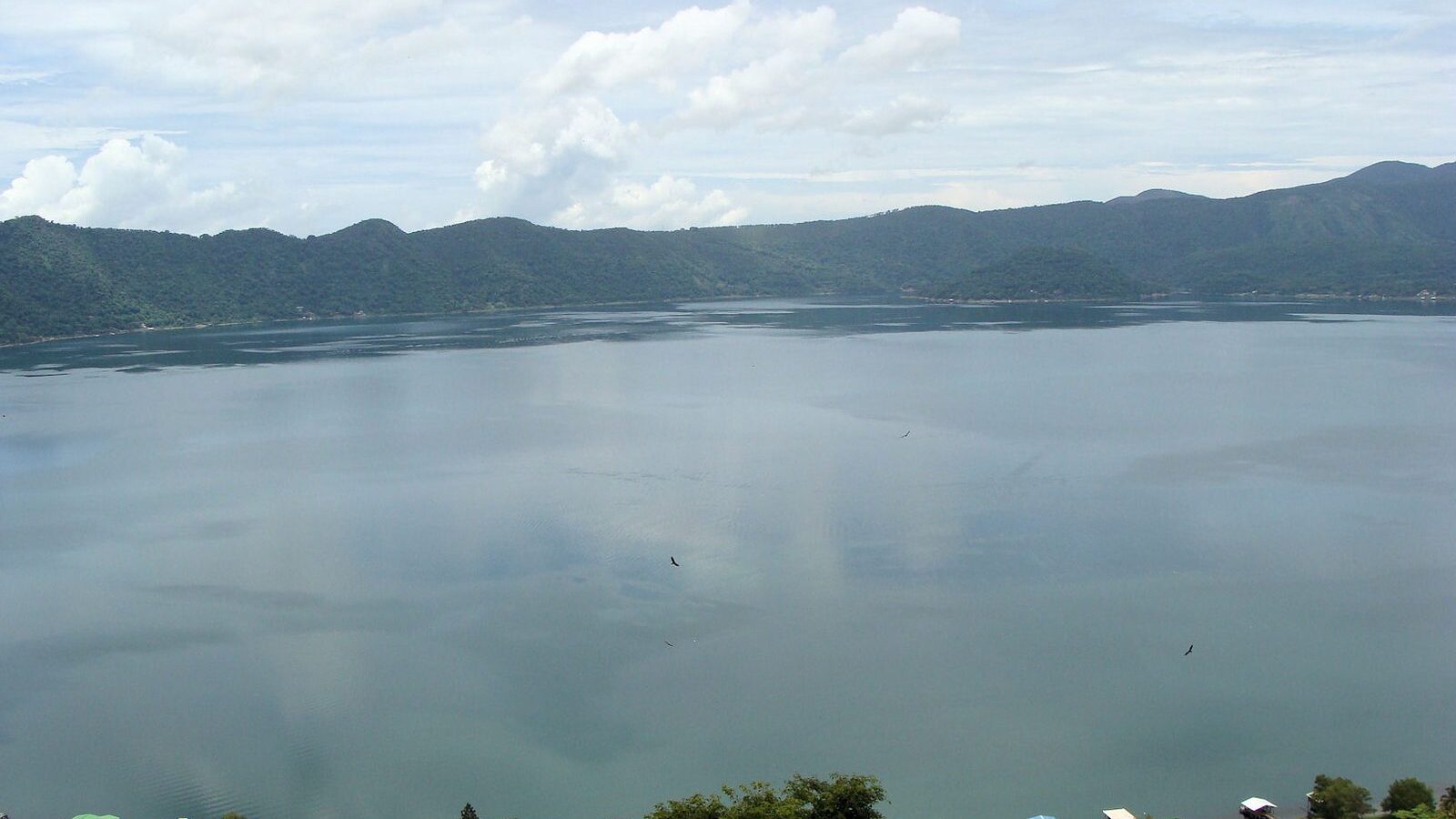
El Salvador is the smallest country in Central America and, over the past few years, one of its most talked-about. World-class surf, a line of volcanoes, mountain towns covered in murals and a food culture all of its own — packed into a territory you can cross in a morning.
Why El Salvador
The country is in the middle of a tourism boom. According to the Ministry of Tourism, it received more than 3.6 million international visitors between January and November 2025. National Geographic has called it the new great destination in Central America, pointing at the empty beaches, the surf and the volcanic landscapes.
The practical appeal is the scale: the international airport is 45 minutes from the Pacific beaches, and nothing in the country is more than about four hours from anything else.
The main destinations
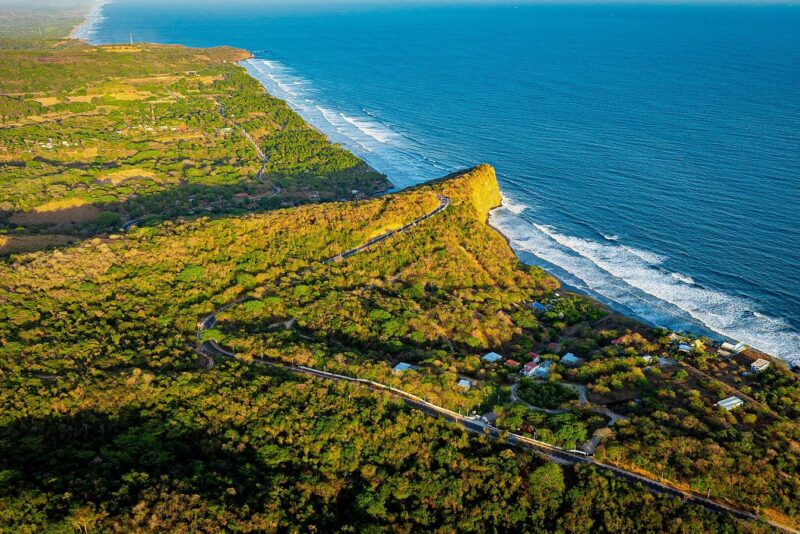
Surf City and the Pacific coast
The government’s Surf City programme has put El Salvador on the world surfing map, and the country now hosts international championships every season.
- Punta Roca: a long, fast right-hand point break rated among the best in the world. For experienced surfers only.
- El Tunco: the heart of the scene, with waves on both sides of the village and the busiest nightlife on the coast.
- El Sunzal: a long, forgiving right and the venue for international longboard events.
- Flores and eastern El Salvador”>Punta Mango: hollow and powerful, in the east, usually reached by boat.
- El Zonte: quieter, consistent, and internationally known as Bitcoin Beach.
Water temperature stays between roughly 25 and 29 °C all year, so no wetsuit is needed in any month.
The Ruta de las Flores
In the west, a road through the coffee mountains linking five towns: Juayúa, with its weekend food festival and the walk to seven waterfalls; Concepción de Ataco, the most visited, covered in murals; Apaneca, coffee country with two crater lagoons; Salcoatitán, quiet and colonial; and Nahuizalco, a craft town with strong indigenous traditions.
November to February is the best window, when the flowers are out and the coffee harvest is under way.
The volcanoes
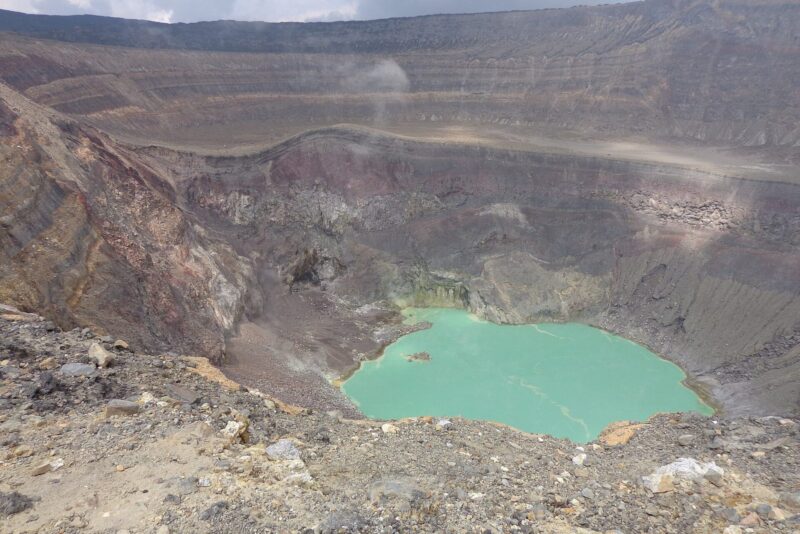
El Salvador has more than twenty volcanoes. Santa Ana (Ilamatepec), at 2,381 metres, is the highest, and the walk to its turquoise crater lake is the country’s signature hike. Izalco was once called the lighthouse of the Pacific for its near-continuous eruptions, Cerro Verde has the easy trails and the viewpoints, and El Boquerón sits right above the capital.
Suchitoto
The best-preserved colonial town in the country, 47 km from San Salvador. Cobbled streets, the church of Santa Lucía from 1853, Lake Suchitlán and its islands, and a quiet arts scene in restored courtyard houses.
Joya de Cerén
A farming village buried by ash around AD 600 and preserved almost intact — the Pompeii of the Americas, and a World Heritage Site. It shows how ordinary Maya people actually lived, which the great ceremonial cities do not.
When to go
The dry season runs from November to April: clear skies, best for the volcanoes and the colonial towns. The rainy season, May to October, brings afternoon storms — and the biggest surf swells of the year, since they come up from the southern hemisphere.
Money, transport and safety
El Salvador uses the US dollar. Carry small notes. A hire car is the most practical way to move between the coast, the volcanoes and the Ruta de las Flores, since bus timetables rarely line up with tides or hiking starts.
Safety has improved dramatically in recent years and the tourist corridors are calm, but as in any country, check your own government’s current travel advice before booking, and again before you go.
What to eat
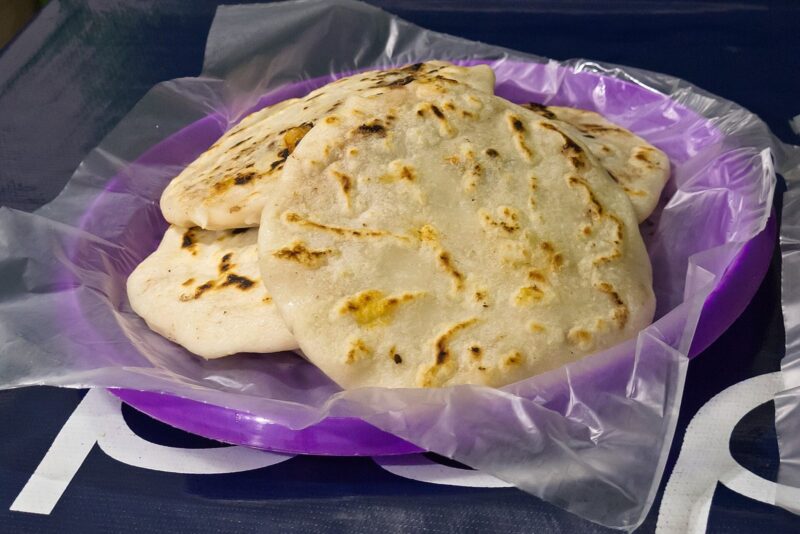
Pupusas, obviously — thick corn cakes stuffed with cheese, beans or pork, eaten by hand with pickled cabbage. Beyond them: yuca frita, panes con pollo, fresh seafood on the coast and atol de elote from a street stall.
Prices and schedules change every season. Confirm before booking.