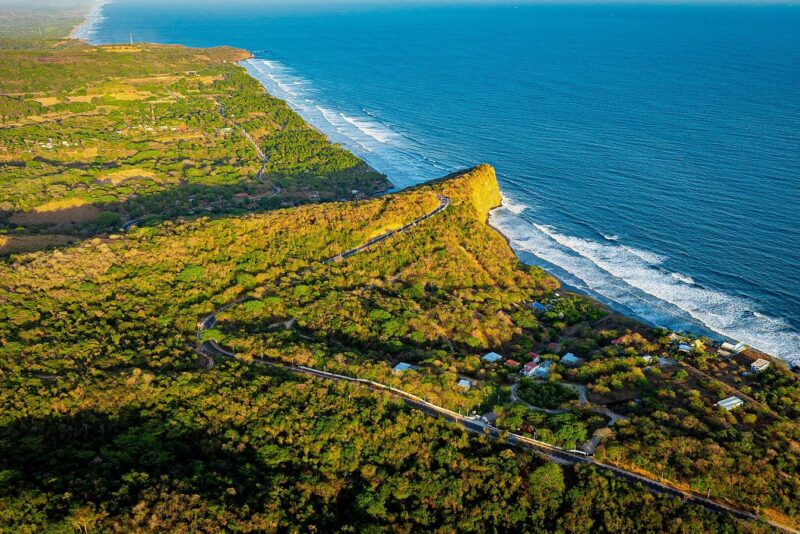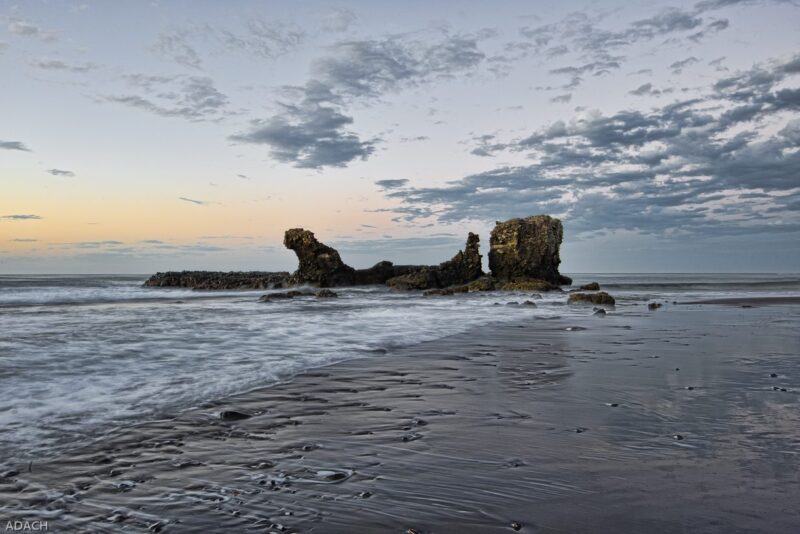
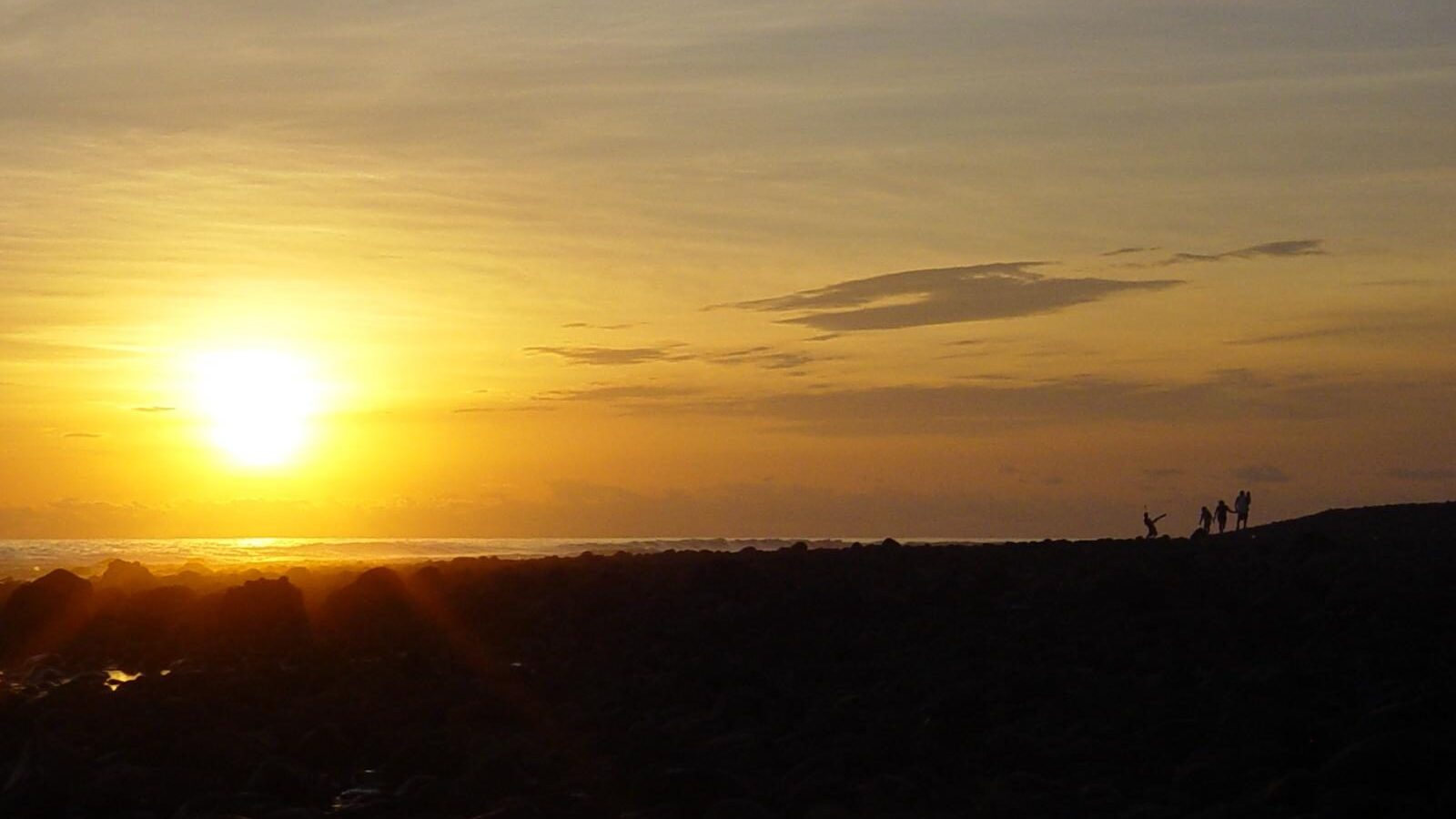
Surf City is the name El Salvador gave its coastline in 2019, when the country decided to build its tourism around surfing. It is not a city or a resort: it is a policy, and above all a stretch of Pacific holding some of the longest, most consistent right-hand point breaks on the continent.
It worked. El Salvador has hosted several International Surfing Association world championships in recent years, along with a stop on the professional WSL tour at Punta Roca. Here is how to travel the coast, whether or not you surf.
What Surf City actually is
- Surf City 1: the La Libertad coast, under an hour from San Salvador and the airport. Punta Roca, El Tunco, El Sunzal, El Zonte and Mizata. This is the developed stretch, with the accommodation and the surf schools.
- Surf City 2: the east of the country, in Usulután and La Unión, with El Cuco, Las Flores, Punta Mango and Esterón. Further away, far quieter, and with waves of the same calibre.
The Carretera del Litoral, the coast road, links the two and is a fine drive in its own right.
The breaks, one by one
Punta Roca — advanced
The jewel. A long, fast, powerful right-hand point over rock, widely rated among the best of its kind anywhere. It is the wave that brought the professional tour to the country.
It is not a wave to learn on or to experiment with. The bottom is live rock, the peak is localised, and on a big swell it turns serious. Reef boots are not optional.
La Bocana — intermediate to advanced
At the river mouth next to El Tunco. It breaks both left and right, and it is considerably hollower and more demanding than it looks from the shore. The bottom shifts after the river floods.
El Sunzal — all levels
The long, slow, rolling right that makes El Salvador a destination for beginners and longboarders as well as experts. It is where almost every surf school teaches, and where ISA longboard world championships have been held. At mid tide it is close to perfect for learning.
El Zonte — intermediate
A right over cobblestones, more sheltered and far less crowded than El Tunco. The village is small and internationally known for something else entirely: this is where the Bitcoin circular-economy experiment began, hence the nickname Bitcoin Beach. Some businesses still accept it, but bring cash or a card.
Mizata — intermediate
Further west, where the road hugs the cliffs. Fewer people, cleaner water and a fast right. The obvious choice if you want to escape the scene at El Tunco.
Las Flores and Punta Mango — intermediate to advanced
Out east. Beautiful right-hand points with long walls and very few people in the water. Punta Mango is usually reached by boat. This is the stretch that has grown most in recent years.
When to go
The Salvadoran Pacific picks up southern hemisphere swells, so the main season runs from March to October, with the biggest months between May and August. That overlaps with the rainy season, but the rain here tends to fall in short afternoon bursts.
From November to February the surf drops in size and the weather is drier — the better window if you are learning, or travelling with people who do not surf. The water is warm all year and you will not need a wetsuit in any month.
The championships
El Salvador has a multi-year agreement with the International Surfing Association and hosts world championships each season. In 2026 the ISA World Junior Surfing Championship ran from 4 to 13 September at La Bocana and El Sunzal, and the ISA World Longboard Championship is scheduled for 13 to 19 November 2026, the fourth consecutive year the country has hosted it.
Championship weeks bring atmosphere, music and crowds — and full, expensive accommodation. If you are coming to surf on your own account, those are not the weeks to pick.
Getting there and around
San Salvador international airport is about 45 minutes from the La Libertad coast, one of the shortest airport-to-beach transfers in the Americas. There are shared shuttles, taxis and public buses along the coast road.
To move between breaks, hire a car: the beaches are kilometres apart and bus timetables do not line up with tides. For the eastern coast, allow three and a half to four hours from the capital.
If you do not surf
The coast works anyway: seafood restaurants on the sand, exceptional sunsets, natural pools at Los Cóbanos, diving on the only rocky reef of the Central American Pacific, and volcano trips inland less than two hours away.
Practical advice
- Reef boots. Almost every break here has a rock or cobble bottom.
- Check the tide before paddling out: it completely changes the character of these waves.
- Respect the line-up at localised peaks, Punta Roca above all.
- Currents: the river mouth at La Bocana pulls hard. If you are not confident, stay out of it.
- Currency: El Salvador uses the US dollar. Carry small notes.
Championship dates, lesson prices and board hire change every season. Confirm before booking.